Between the Body and the Bottle
Some subjects begin inside the body and end in a factory, and that shift says more about modern life than we usually admit.
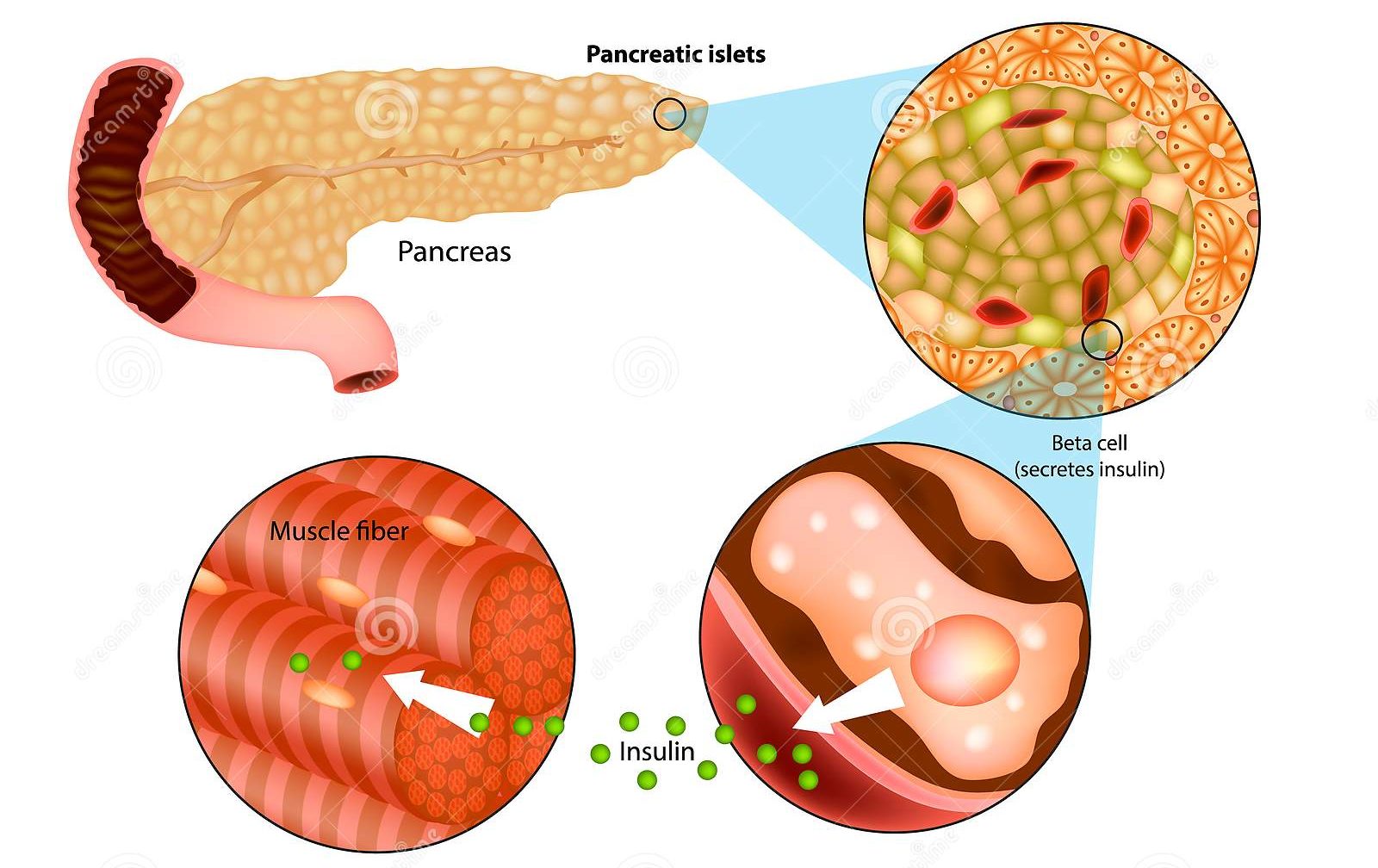
There is something quietly arresting about a question that begins in the body and ends in a warehouse.
Insulin is one of those subjects. People hear the word and often think of urgency, routine, refrigeration, labels, supply chains, appointments, small rituals of planning. But before any of that, there is a more intimate curiosity hiding underneath it all: where does something like this begin? Not just in the technical sense, but in the human sense. At what point does a natural process become a managed one, a personal one become industrial, an invisible function become an object that must be stored, transported, tracked, and remembered?
That shift is what makes the topic so compelling. It is not only about biology. It is also about modern life’s strange habit of taking what once felt mysterious and placing it into systems of packaging, temperature control, and logistics. Some things begin as a whisper inside the body and end as a product with handling instructions.
The fascination of origins
We are drawn to origin stories because they promise order. If we can point to the place where something is made, we feel a little closer to understanding it. That instinct shows up everywhere: in food, in technology, in medicine, in the stories people tell themselves about health and control.
A topic like insulin sits right at the crossroads of those impulses. Part of the fascination comes from the body itself, which still feels almost mythic no matter how much language we build around it. The body works in the background until something calls attention to it. Then suddenly people want maps. They want locations. They want names for the hidden rooms.
And once the question moves beyond the body, another kind of curiosity takes over. If something matters deeply in daily life, where is it kept? How is it protected? How does it travel through a world built on deadlines and distances? The practical details begin to feel emotional, because they are never only practical.
Storage is never just storage
There is a reason certain objects take on symbolic weight in a household. A charger left by the door, a spare key under a planter, a carefully labeled container in the fridge. These are ordinary things, yet they quietly organize behavior around them.
When people talk about storing something important, they are often really talking about trust. Trust in routine. Trust in consistency. Trust that tomorrow will still be manageable if today is handled with care.
That is why the language around storage can feel bigger than it sounds. It is not merely about placement. It is about preserving possibility. Keeping something stable becomes a way of keeping life stable. The object itself may be small, but what gathers around it is not.
Manufacturing and the modern imagination
Factories tend to carry two competing meanings at once. On one hand, they represent distance from nature, the realm of machinery, repetition, and scale. On the other, they represent human effort to make what is needed available beyond the limits of chance.
That tension is especially vivid here. A substance associated with the body also belongs to systems much larger than any one person. It lives in the overlap between the intimate and the industrial.
Maybe that is why the topic lingers in the mind. It reminds us that modern care is rarely simple. It is layered. Something can be deeply personal and globally distributed at the same time. It can be tied to a body and also to infrastructure. It can ask for tenderness and depend on procedure.
In that sense, the question of production becomes a question about civilization itself. How do we take what matters at the smallest scale and support it at the largest one?
Invisible work, visible routines
Most of life depends on processes we do not watch happening. Water arrives. Lights turn on. Messages appear. The body, too, performs its own unseen labor until something interrupts the illusion of effortlessness.
Then the hidden work becomes visible all at once.
That visibility changes people. It changes how they think about time, preparation, and even language. Words that once seemed abstract suddenly feel physical. Terms that belonged to diagrams enter kitchen conversations. The distance between textbook and daily life collapses.
That may be the real reason this subject catches attention. It gives form to something people usually experience only indirectly: the meeting point between internal life and external systems.
A thoughtful look at where insulin enters the story does more than name a location. It reveals a chain of dependence, care, and design that most people rarely stop to picture.
More than a technical question
Some questions sound factual but are really philosophical. Where is it produced? Where is it stored? Who makes it possible for it to move from one place to another?
These are practical questions, yes, but they also carry a quiet emotional charge. They ask us to notice how much of life rests on coordinated, largely invisible effort. They ask us to see that the boundary between “natural” and “manufactured” is often less of a wall and more of a bridge.
And perhaps that is the most interesting part. A topic that seems narrow at first glance opens into something much wider: a reflection on dependence, design, fragility, and the hidden architecture of everyday living.
Some things are easy to take for granted because they happen out of sight. But the moment we start tracing their path, from the body to the bottle and beyond, they stop looking ordinary. They start looking like one of the clearest expressions of how modern life is built: from invisible processes, carefully held together.
https://canadianinsulin.com/articles/where-is-insulin-produced/