Some appointments no longer begin with a waiting room
A quiet look at why virtual care feels less like a gadget and more like a shift in how people make room for being looked after.
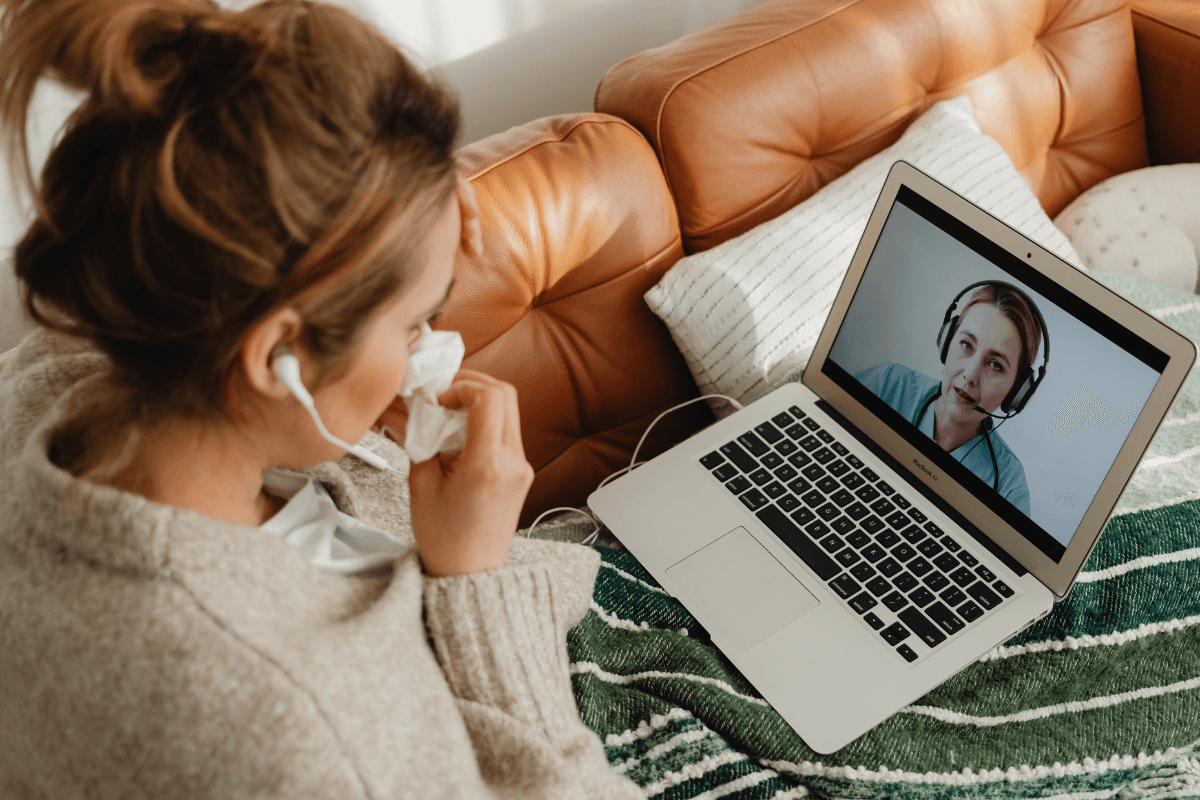
There was a time when the idea of an appointment felt inseparable from movement. You left the house, sat in traffic, searched for a building entrance, signed your name on a clipboard, and settled into that peculiar waiting-room stillness where everyone pretends not to look at one another. Care had a stage set, and it was full of small rituals.
Now, for many people, that stage has changed.
Virtual visits have introduced a different kind of doorway into everyday life. Instead of crossing town, someone crosses from the kitchen to the couch, from a work break to a quiet corner, from a noisy day into a brief, focused conversation. The change seems practical on the surface, but it also reveals something deeper about how people want life to fit together. Convenience is part of it, of course. But so is mood, privacy, timing, energy, and the simple relief of not turning every concern into a whole outing.
A new kind of threshold
What makes telehealth interesting is not only the technology behind it. Screens are already woven into almost everything: work, friendships, shopping, family updates, the casual maintenance of modern life. What stands out is the way a screen changes the emotional architecture of an appointment.
A waiting room announces itself. A virtual visit arrives more quietly. It appears in the middle of ordinary surroundings, and that can make the experience feel less ceremonial, less intimidating, maybe even more human for some people. There is something disarming about discussing serious things while sitting in a familiar chair with your own lamp in the background.
At the same time, that familiarity can feel strange. We are used to keeping certain spaces separate. Home is home. Care happens elsewhere. Virtual appointments blur those lines, and the blurring says something larger about the era we live in. More and more, the places where life happens are overlapping. Work enters the living room. School appears on a laptop. Advice arrives through headphones. Support shows up in a small rectangle of light.
The disappearing choreography
One of the least discussed shifts may be the loss of what used to surround an appointment. There was once a whole choreography attached to it: arranging transportation, budgeting extra time, sitting under fluorescent lights, noticing the clock move differently than it does anywhere else. These were not the purpose of care, but they shaped how care felt.
Virtual visits strip much of that away. The encounter can become more direct, almost startlingly so. There is less build-up, less transition, fewer signals that tell the mind, now we are entering an official space. For some, that is liberating. For others, it can feel oddly abrupt.
This is why telehealth feels bigger than a tool. It is also a cultural adjustment. It asks people to rethink what “showing up” means. Presence no longer depends entirely on physical arrival. Attention becomes its own form of attendance.
I was reminded of that while reading a brief overview of virtual care in everyday terms. The topic is easy to frame as innovation, but what lingers is something more ordinary: the way people try to make care fit inside real lives rather than build a whole day around it.
Less performance, more texture
Traditional appointments often come with a subtle pressure to present oneself a certain way. You prepare to leave the house. You gather your thoughts while moving through public space. By the time you arrive, the experience has already acquired a polished edge.
At home, the texture is different. Life is still visible around the edges. A dog might bark. A child might wander past. A coffee mug sits nearby. None of this makes an interaction less meaningful. In some ways, it may make it feel more rooted in the actual conditions of a person’s life instead of a temporary, curated version of it.
That may be part of why people often talk about virtual services with a tone that is less about novelty and more about relief. Not amazement. Not spectacle. Relief. Relief that something important can happen without the extra strain of logistics. Relief that access sometimes looks less dramatic than expected.
Not futuristic, just absorbed into life
The most telling thing about telehealth may be that it no longer sounds especially futuristic. It has moved from the category of shiny possibility into the quieter category of normal adaptation. That is usually how lasting change happens. Not with a dramatic announcement, but with a gradual shrug. People stop asking whether something is revolutionary and start asking whether it fits Tuesday.
And maybe that is the real story here. Virtual visits are not only about replacing one setting with another. They reflect a broader preference for systems that bend toward human schedules, human energy, and the complicated geometry of modern days. They suggest that care does not always need a hallway, a parking lot, or a row of chairs to feel real.
Sometimes it begins with a login, a pause, and a face appearing on screen. And somehow, that can be enough to make the whole idea of an appointment feel newly possible.
https://medispress.com/health-hub/telehealth-services-a-smarter-faster-way-to-get-care/