Some foods arrive carrying more meaning than flavor
Quinoa often enters the room as more than dinner: part staple, part symbol, part small negotiation with modern eating.
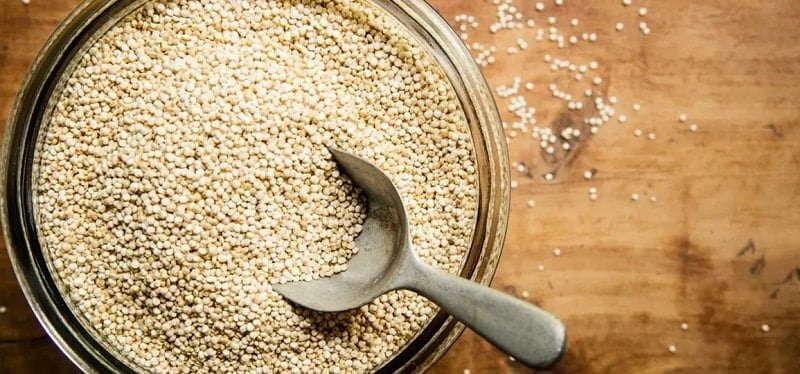
Quinoa has a way of showing up with a reputation already attached.
Long before it lands in a bowl, it tends to be framed as the sensible choice, the modern pantry upgrade, the grain that says someone is trying to be intentional. Even people who have never cooked it seem to know what it stands for. It belongs to that category of foods that feel almost overinterpreted, as if every spoonful arrives with a backstory about discipline, balance, or better decisions.
That makes it more interesting than it first appears.
The food and the feeling around it
There are ingredients we eat without commentary, and then there are ingredients that collect language around themselves. Quinoa belongs to the second group. It rarely enters conversation as just lunch. Instead, it gets wrapped in questions about wellness, routines, and the subtle performance of being “good.” Not morally good, exactly, but nutritionally well-behaved.
That’s part of why it becomes such a frequent subject in conversations about blood sugar, portion awareness, and everyday meals. It sits at the crossroads of practicality and symbolism. People aren’t only asking what it is like to eat. They are also asking what it means to choose it.
And that distinction matters.
A lot of modern food culture is less about individual ingredients than about the stories we attach to them. Quinoa has been turned into shorthand for a whole kind of person: thoughtful, label-reading, maybe a little hopeful that dinner can quietly improve the rest of life. Whether that story is fair or not, it follows the ingredient everywhere.
A small seed with a large social life
Some foods stay in the kitchen. Others migrate into identity.
Quinoa has lived many public lives: trend, staple, punchline, aspiration, backup plan. It has been mocked for sounding fussy and praised for sounding smart. It has appeared in office lunches, recipe blogs, meal prep containers, and those weeknight dinners assembled with equal parts care and fatigue.
Its cultural journey says something about how people eat now. We want foods that feel versatile, manageable, and a little reassuring. We also want them to fit into conversations that are already happening around energy, steadiness, and how the body responds to the ordinary rhythm of meals.
That is probably why titles like this discussion of quinoa and diabetes attract attention. The curiosity goes beyond a single ingredient. It reflects a wider desire to make everyday eating feel legible, less mysterious, more in tune with the body’s signals.
The quiet theater of the bowl
There is also something visual about quinoa that shapes its reputation. It looks tidy. It photographs well. It settles into a bowl with a kind of composure. Beside roasted vegetables or folded into a warm salad, it gives the impression that life is being handled.
Of course, food rarely carries that much power. A grain cannot rescue a chaotic week, and a carefully arranged lunch does not automatically transform anyone’s habits. But appearances matter because they influence emotion. When a meal looks balanced, many people experience it as balanced before the first bite.
That doesn’t make the experience fake. It makes it human.
We often eat with expectation long before we eat with appetite. Some foods feel indulgent, some nostalgic, some efficient. Quinoa tends to feel aspirational. It suggests steadiness. It suggests paying attention. It suggests that perhaps ordinary meals can be part of a larger effort to live with more awareness.
Why the conversation keeps returning
Part of the staying power comes from flexibility. Quinoa can be warm or cool, dressed up or left plain, turned into something comforting or something almost minimalist. It adapts to the mood of the cook. In that sense, it mirrors the larger wellness conversation itself: endlessly adjustable, deeply personal, and often shaped by whatever people need a meal to represent that day.
For one person, it may signal structure. For another, it may be convenience dressed in better lighting. For someone else, it may simply be familiar now, no longer trend-driven at all.
That might be the most revealing thing about it. Foods that begin as symbols sometimes become ordinary, and when they do, they become more honest. Once quinoa loses some of its halo, it can finally just participate in daily life like anything else: cooked on a distracted weeknight, packed for later, eaten without a thesis attached.
Beyond the label of “healthy”
Perhaps the most useful cultural shift is this: moving away from asking whether a food is virtuous and toward noticing how people actually live with it.
Meals are not made in laboratories of perfect intention. They are made between errands, after work, during stress, in hope, in boredom, in routine. Quinoa is compelling not because it solves the puzzle of eating well, but because it reveals how much emotion and expectation gets poured into even the smallest ingredients.
A seed becomes a symbol. A side dish becomes a conversation about control, care, and uncertainty. And somewhere in the middle of all that, a person is just trying to decide what feels right for dinner.
That ordinary moment may be the real story: not whether one ingredient can carry all the answers, but why we keep asking our meals to mean so much.