Some foods carry more questions than their flavor
A small fruit can hold an outsized place in conversations about restraint, sweetness, and everyday decision-making.
There is something almost unfair about the way certain foods get drafted into serious conversation.
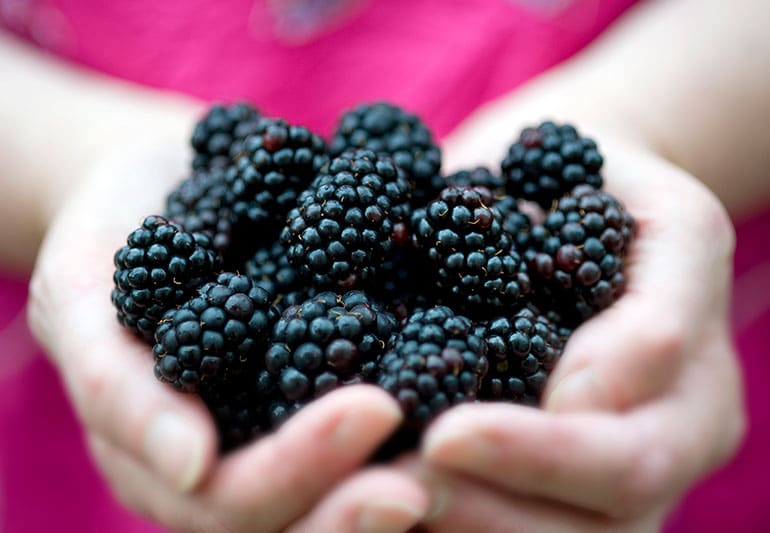
A blackberry, for instance, looks like it belongs entirely to pleasure: stained fingertips, late-summer bowls, the faint drama of seeds, that deep purple-black color that feels richer than it is. And yet, once food becomes part of a larger discussion about balance and blood sugar, even a berry starts to carry a second identity. It is no longer only tasted. It is evaluated, interpreted, measured against routines and expectations.
That shift says as much about modern eating as it does about the fruit itself.
When sweetness becomes a negotiation
There was a time when fruit occupied a simpler place in the imagination. It suggested seasonality, ripeness, maybe a bit of abundance if the basket was full. Now, many people encounter fruit through a more layered lens. Sweetness is not just sweetness anymore. It arrives with questions attached.
Blackberries are especially interesting in that landscape because they do not perform sweetness in an obvious way. They are not flashy. They can be tart, earthy, almost woodland-like. They ask to be noticed rather than adored at first bite. That makes them feel oddly symbolic in conversations about mindful eating: a food that seems to live somewhere between treat and practicality.
And perhaps that is why they show up so often in discussions shaped by caution. They fit the mood of the moment. People want food that feels gentle, sensible, and still recognizably enjoyable.
The quiet psychology of portions
One of the more revealing things about food culture is how quickly a portion stops being a portion and becomes a moral category.
A handful can feel relaxed. A bowl can feel intentional. A second serving can suddenly feel like a decision loaded with meaning. None of this is really about blackberries alone, of course. It is about the way we learn to read our own habits through food. We turn ordinary acts into signals: discipline, comfort, control, spontaneity.
Blackberries, in that sense, occupy a curious middle ground. They rarely seem extravagant, but they are also not emotionally neutral. Their texture slows you down. Their flavor has edges. They invite the kind of eating that feels observant rather than automatic.
That may be part of their appeal in conversations around routine. A food does not have to be dramatic to feel useful. Sometimes it simply needs to leave enough room for attention.
A fruit with a different kind of presence
Not all fruit enters the room the same way. Bananas feel dependable. Grapes feel easy to keep eating without thinking. Mango can feel lush, almost theatrical. Blackberries are quieter. They have a kind of brambly seriousness.
Maybe that is why they are easy to discuss in relation to steadiness. They do not seem engineered for excess. They feel like the opposite of a rush. Even their messiness is modest.
In everyday life, this matters more than nutrition language often captures. People do not simply choose foods based on abstract properties. They choose foods based on mood, rhythm, and the story a food tells about the day ahead. A breakfast that feels too sweet may read as unstable. A snack that feels too austere may not last emotionally. Blackberries sit in that narrow and increasingly valued territory where a food can feel both pleasant and composed.
Beyond the label of “good”
What gets lost in a lot of food talk is that people are rarely looking for perfection. They are looking for a way to live with fewer internal negotiations.
That is why broad conversations around fruit, balance, and daily eating habits tend to linger. They are not really just about ingredients. They are about trust. Can a person enjoy something without feeling they have stepped outside the lines? Can food remain food, rather than becoming a test?
Blackberries make that tension visible. They are sweet, but not simplistically so. Small, but not insignificant. Familiar, but not bland. In a culture obsessed with sorting foods into heroes and villains, they resist the performance. They seem to suggest a different standard entirely: maybe the point is not purity, but fit.
That is also the tone behind many everyday discussions gathered around topics like blackberries and blood sugar routines. What people often seem to want is not a miracle food, but a calmer relationship with ordinary choices.
The appeal of the almost-wild
There is another reason blackberries feel distinctive. They still carry a trace of the hedgerow, something slightly untamed. Even store-bought ones retain the personality of a fruit that once had thorns nearby. That matters on a symbolic level.
We live in a packaged world. Foods that feel a little less polished can seem reassuring, not because they solve everything, but because they interrupt the smooth language of optimization. Blackberries do not feel invented by a marketing team. They feel found.
And perhaps that is the deeper attraction. In a time when so many eating decisions are filtered through pressure, metrics, and self-surveillance, a fruit that still feels like a small discovery has unusual power. It reminds people that nourishment is not only about control. It is also about texture, memory, restraint without severity, and pleasure without spectacle.
Maybe that is why a bowl of blackberries can inspire more thought than its size would suggest. Some foods are not just eaten. They become little mirrors for the way we are trying to live.
https://canadianinsulin.com/articles/blackberries-and-diabetes/