Some names arrive before understanding does
A small reflection on the strange moment when a clinical name enters ordinary life and changes the tone of a day.
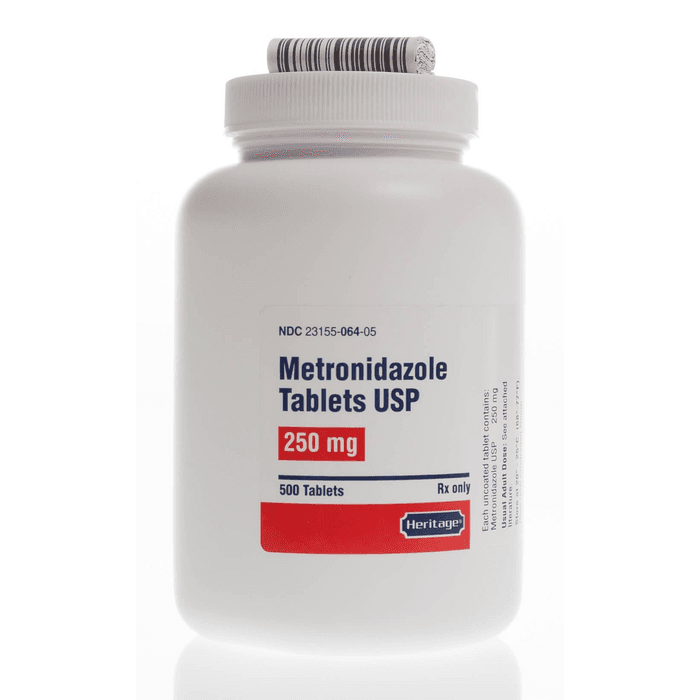
There is a particular kind of word that does not feel like it belongs to everyday conversation until suddenly it does. It appears on a label, in a message, in the quiet exchange between a person and a counter, and from that moment on it carries more emotional weight than its syllables should reasonably hold.
Metronidazole is one of those words.
Not because of how it sounds, exactly, though it does have that firm, laboratory-made rhythm to it. It is more about what happens when a name like that crosses from the technical world into private life. A day that began with errands, coffee, traffic, and unread notifications becomes slightly different when a precise, unfamiliar term joins the script. The name sits there with an odd authority. Even before anyone knows much about it, it changes the atmosphere.
That shift says something interesting about modern life. We live among systems built on naming things exactly, yet our personal experience is rarely exact at all. We feel tired, distracted, uneasy, relieved, cautious, hopeful. Then a formal word arrives and seems to promise order. It suggests that uncertainty has been gathered into a container, printed neatly, and handed back to us in a form we can hold.
The emotional life of technical language
Most people do not meet names like this in abstract terms. They meet them in moments. A routine gets interrupted. A small concern becomes a real appointment. A practical errand picks up emotional weather.
What is striking is how quickly language changes the mood. A plain description often feels manageable; a precise term can feel heavier, even when it is simply more specific. That is not necessarily because the word is frightening. Sometimes it is the opposite. Sometimes specificity is comforting. It draws a line around something vague. It makes the unknown seem less shapeless.
But the emotional reaction remains real. Certain names sound like paperwork and chemistry and fluorescent lighting. They remind us that the body, which we like to treat as instinctive and personal, is also observed through categories, labels, and systems.
Why some names linger
Not every technical word stays with us. Some vanish the moment they are no longer needed. Others hang around in memory long after the practical reason has faded.
Part of that is sound. Part of it is timing. And part of it is the simple fact that words become important when they enter life at a threshold moment. The threshold does not have to be dramatic. It can be a very ordinary pause: standing in line, checking a bag, rereading a label, thinking about the week ahead. The ordinary setting often makes the moment more memorable, not less.
That may be why product pages and reference points like this listing can feel like more than retail infrastructure. They become part of a small archive of a person’s attention. A name that once meant nothing now marks a brief season of focus.
The culture of looking things up
There is also a broader habit at work here. We are all trained now to search first and feel later, or perhaps to search because we are already feeling too much. A term appears, and within seconds it becomes a browser tab, a question, a trail of tabs, a half-understood set of impressions.
This ritual is so common that it barely seems worth mentioning, yet it has changed the texture of modern uncertainty. We no longer sit with a name for very long before trying to decode it. We want context immediately. We want tone, clarity, reassurance, and a sense that the word can be brought back down to human scale.
And still, no amount of searching fully removes the feeling that some names carry. They remain slightly larger than information. They belong to that category of language that arrives with emotion attached.
A word as a marker of time
It is easy to think that labels are only labels, but that misses their quieter role. They often become timestamps. People remember periods of life through the words that accompanied them: a term on a form, a phrase used in a waiting room, a name printed on a package. Language becomes part of memory’s filing system.
So a word like Metronidazole is not only a technical identifier. In lived experience, it may become shorthand for a week of paying closer attention, a few days of rearranged routine, or a moment when the body interrupted whatever story the day was supposed to tell.
That is why clinical language can feel unexpectedly intimate. It enters from the outside, but it settles into personal memory very quickly.
In the end, maybe that is the quiet lesson hidden in names like this: we do not experience them as dictionaries do. We experience them as weather, as interruption, as focus, as relief, as the sudden seriousness of ordinary time. A word arrives from a system built to be precise, and somehow it becomes part of a human story, which is never precise at all.