Some Names Arrive Before We Know Their Story
A quiet look at how unfamiliar medicine names enter everyday life long before we understand what they seem to promise.
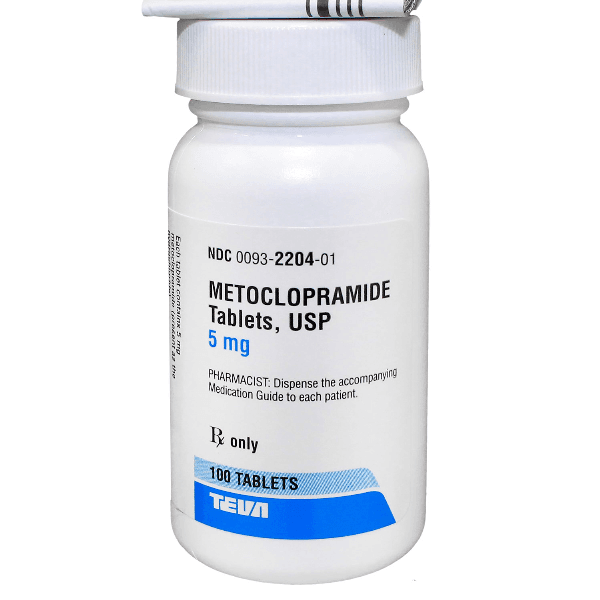
There is a particular feeling that comes with encountering a medicine name for the first time. It lands on the page with all the confidence of science and none of the warmth of conversation. Metoclopramide is one of those names. It sounds precise, almost architectural, as if every syllable were designed to keep emotion at a distance. And yet the reason people notice a name like that is rarely abstract. It usually appears in a moment when life has become unusually physical, unusually immediate, and a little less elegant than we prefer to admit.
That contrast is what makes these names so interesting. The language is formal; the circumstances are deeply human. A person may encounter a word like metoclopramide in a pharmacy listing, on a label, in passing conversation, or while moving through one of those practical seasons of life when the body insists on becoming the center of attention. Suddenly, a term that looks like it belongs in a laboratory begins to travel through kitchens, handbags, bedside tables, and late-night searches. It leaves the controlled world of packaging and enters ordinary routine.
The strange poetry of technical language
We do not often talk about how odd these names are when placed beside the messiness of everyday experience. They are crisp where life is blurry. They are systematic where people are improvising. Their job, culturally speaking, seems to be reassurance through structure: here is a name, here is a label, here is something that can be identified. Even before anyone understands the finer details, the existence of a proper term can feel like a small act of order.
That may be why medication names linger in memory differently from other kinds of consumer language. They are not charming. They are not designed to be loved. They are remembered because they attach themselves to vulnerable moments. A grocery brand might come and go. A technical-sounding medicine name can stay with someone for years simply because it was present during a hard week, an anxious appointment, a disrupted trip, or an ordinary day that suddenly stopped feeling ordinary.
When the clinical meets the domestic
What fascinates me is how quickly something that looks official becomes part of household language. A name first seen in a formal setting can end up spoken over tea, mentioned in text messages, folded into family shorthand. It is a reminder that healthcare, despite all its institutional language, is lived in very personal places. The most formal terms often end up nearest to the least formal scenes: slippers on the floor, a glass of water by the bed, someone asking from another room whether everything is alright.
In that sense, metoclopramide is not just a product name sitting on a page. It is also an example of how modern life trains us to become fluent in vocabularies we never expected to learn. People pick up these words not because they are interested in pharmacology as an abstract subject, but because life introduces them to necessity in small, unglamorous increments.
There is also something revealing about the way we react to unfamiliar medical language. We often assume that if a word is difficult to say, it must belong to a world of expertise beyond us. Sometimes that is true in a technical sense, but culturally the story is more intimate. These words become meaningful not through mastery, but through proximity. We learn them because they are suddenly close to daily life.
Names as emotional landmarks
Every era has its own dictionary of common concerns. Some words define technology, some define politics, and some enter public awareness because they sit at the intersection of care and uncertainty. Medicine names occupy a peculiar corner of that map. They are both impersonal and deeply attached to memory.
A person might not remember every detail of a difficult season, but they may remember a name seen on a box, on a receipt, or on a screen. It becomes a marker, almost like a timestamp. That does not make the name dramatic in itself. If anything, its plainness is part of the point. A technical label can become a container for a very untechnical experience: worry, relief, inconvenience, interruption, waiting.
That is why browsing a page such as this listing for metoclopramide can feel like more than a product encounter. It can prompt a recognition of how many quiet systems sit behind everyday attempts to feel normal again. Not glamorous systems, not cinematic ones—just the infrastructure of modern care, where official terminology meets the ordinary hope of getting through a day with less disruption.
The calm authority of a name
Maybe that is the hidden role of names like this. They do not tell a full story, but they imply that a story has already been noticed, categorized, and given form. In uncertain moments, people are often drawn to that sense of form. Not because a long word is comforting by itself, but because it suggests that confusion has, somewhere, met a framework.
And still, the human part remains. Behind every polished name is an everyday scene: someone pausing at a counter, someone reading a label twice, someone learning how much of adult life involves becoming familiar with words we never expected to need. The names arrive first. The meaning follows more slowly. In that gap between the two, a lot of modern experience quietly lives.