Some Names Arrive Carrying More Than Their Syllables
A single product name can become a mirror for hope, routine, and the quiet negotiations people make with change.
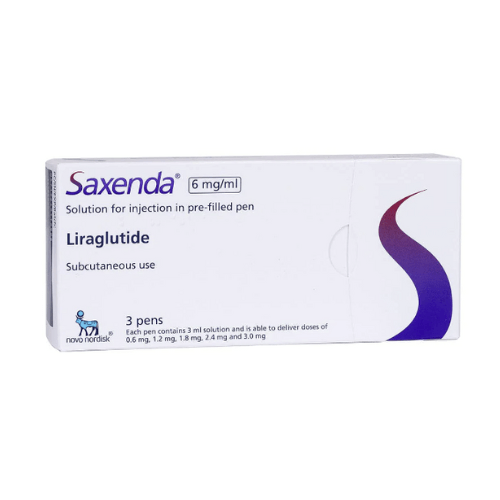
Some names enter the room already loaded. They are printed on packaging, repeated in searches, passed between friends in lowered voices, or noticed in the bright, frictionless spaces of online storefronts. Even before anyone explains them, they seem to carry a story. Not a full one, of course. Just enough to trigger recognition, curiosity, and that peculiarly modern feeling that a solution might be sitting somewhere just beyond the edge of daily life.
That is part of what makes a name like Saxenda interesting. It doesn’t merely function as a label. It behaves more like a cultural signal, one of those compact words that gathers expectation around itself. You can spot this phenomenon all over contemporary life: the way a product name becomes shorthand for a desire, a worry, or a version of the future someone wants to move toward.
In that sense, the name matters almost as much as the object itself.
The strange power of naming
There was a time when many products stayed in their lane. They sat on shelves, did their job, and remained relatively anonymous outside the people who actively needed them. Now, names travel. They move through social feeds, conversations, search bars, and recommendation loops. A person may encounter a name long before they understand its context, and that first impression often has less to do with science or commerce than with atmosphere.
Some names feel technical. Others feel gentle, almost aspirational. A few seem to arrive with a polished aura, as if they belong not just to a category of goods but to a lifestyle vocabulary. That shift says something about the era we live in. We no longer interact only with products; we interact with narratives built around them.
A listing like this one is more than a retail page in the abstract. It is also a reminder of how seamlessly health, identity, convenience, and digital browsing now coexist in the same visual language.
When a product becomes a feeling
What people often respond to first is not detail but mood. A name can suggest momentum. It can imply care, discipline, reinvention, control, relief, or simply the possibility of becoming a little less stuck. That emotional layer tends to hover around modern wellness culture in general, where objects are rarely presented as just objects. They are presented as companions to intention.
This is where things get culturally revealing. We live in a time deeply invested in optimization, but also exhausted by it. People want change, but not punishment. They want support, but not noise. They want to feel practical and hopeful at once. So when a product enters public awareness, it often absorbs all those mixed desires.
That doesn’t mean the name itself has magical properties. It means the surrounding culture is ready to project meaning onto it.
The online storefront as a stage
There is also something worth noticing about where these names are encountered. Increasingly, it happens through e-commerce pages, digital catalogs, clean images, and short bursts of searchable text. The setting influences the feeling. In a physical store, a product is one thing among many. Online, isolated against white space, it can appear oddly significant, almost symbolic.
The image, the title, the spare design—together they create a tiny theater of possibility. We scroll, pause, wonder. Even if we know very little, we recognize a familiar script: here is something that promises to fit into the life-editing project so many people are quietly undertaking.
There is nothing unusual about that impulse. If anything, it feels deeply human. People are always trying to close the gap between how things feel now and how they hope they might feel later. The contemporary twist is that this gap is increasingly navigated through branded language and digital interfaces.
Quiet expectations
What fascinates me most is how private this can be. So many of these encounters happen in solitude: late-night browsing, half-formed searches, a tab left open, a thought postponed until morning. No grand announcement, no dramatic transformation montage, just a person meeting a name and wondering whether it belongs in their story.
That privacy gives product names a particular emotional charge. They become containers for questions people may not even say aloud. Not because the questions are shameful, necessarily, but because they are intimate. They touch routine, self-image, discipline, uncertainty, and the tiring work of beginning again.
A product page can’t hold all of that, obviously. But people can bring all of that to it.
More symbol than object
This is why certain names seem to take on lives of their own. They stop being only references to a specific item and start functioning as symbols in a wider conversation about effort, identity, and what counts as care in a performance-minded culture.
We tend to talk as if choice is purely rational, yet much of modern decision-making is shaped by tone, context, and emotional weather. The name that lingers is often the one that seems to fit an inner narrative already in motion.
And maybe that is the most revealing part. Not what a product is, exactly, but what people are hoping a name might make room for: a reset, a shift, a little steadiness, a sense that change can be approached without spectacle.
Some names arrive carrying more than their syllables because we hand them our expectations the moment they appear. In a world crowded with options, that transfer of meaning may be one of the quietest and most telling habits we have.