Some Names Arrive Carrying More Than They Say
A quiet look at what happens when a single product name starts to hold hope, projection, and the language of modern self-improvement.
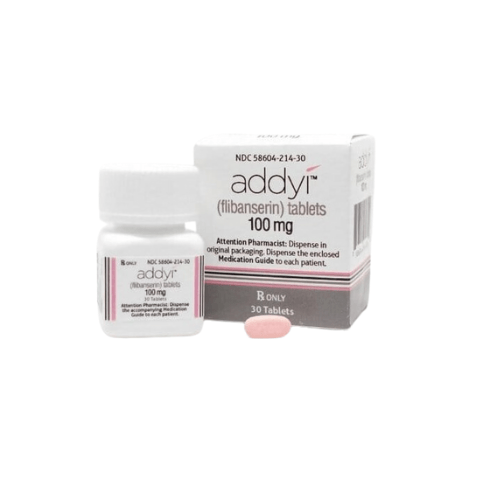
There are some names that do not enter a conversation so much as hover over it. They arrive polished, compact, almost too neat for the messy human realities they seem to gesture toward. Addyi is one of those names. Even before anyone knows what to make of it, the word itself feels curated—soft around the edges, suggestive without being specific, like something designed for a shelf and a feeling at the same time.
That is part of what makes certain products culturally interesting. They do not live only in the practical world of labels, boxes, and transactions. They also live in the atmosphere around them: in late-night searches, in private hesitations, in the strange modern habit of trying to translate intimate experiences into something searchable and solvable. A single name can begin to carry far more than its letters.
The polished word and the untidy life
What fascinates me is the distance between branding and actual living. Real life is rarely tidy. Energy shifts. Interest shifts. Confidence shifts. Relationships move through weather systems of routine, distraction, closeness, resentment, hope, boredom, repair. Yet the language around personal wellbeing often arrives in clean little capsules of certainty. It suggests that what feels emotional, relational, or hard to name can be approached through a single recognizable term.
That does not make the name false. It makes it revealing.
We live in a culture that increasingly wants interior life to be legible. If something feels elusive, we want a tab for it, a category for it, a page title for it. We want a word that can sit still long enough for us to examine it. In that sense, a product name can become more than a label. It becomes a symbol of our desire to make the private world feel manageable.
Why certain names linger
Some names pass by without leaving much behind. Others stick because they seem to promise a narrative. Not necessarily a dramatic one—just a coherent one. A before and after. A reason. A possibility. That pull has less to do with chemistry, commerce, or even marketing slogans than with something older and more human: the wish to believe that confusion can be organized.
And yet, private experience rarely behaves that way. The things people feel uncertain about are usually tangled up with context. Stress can impersonate distance. Routine can flatten surprise. Self-consciousness can masquerade as disinterest. Modern life has a way of turning exhaustion into background noise, and then asking people to perform clarity anyway.
In that setting, a name like Addyi stands out not only because it refers to a product, but because it enters a conversation many people struggle to have plainly. It sits at the intersection of commerce, vulnerability, and the contemporary urge to optimize everything, even the parts of life once considered too personal to package.
The private becoming public
There is also something unmistakably modern about how these topics travel. A name appears on a storefront page, in a search bar, in a passing mention, and suddenly a very private concern becomes part of public language. Not public in the sense of fully shared—most people still speak around these things rather than directly through them—but public enough to be recognized.
That recognition matters. Not because it solves anything by itself, but because it changes the emotional texture of silence. Once a topic has a name attached to it, it becomes easier to acknowledge that it exists. Easier, too, to project onto it.
This is where names become mirrors. People do not just look at them; they look through them. One person sees hope. Another sees pressure. Someone else sees the uneasy merging of intimacy and consumer culture. None of these reactions are irrational. They are simply different ways of reading the same small signal in a crowded world.
A simple product page, like the one for Addyi, can therefore feel like more than a listing. It can seem like a cultural artifact from an era that wants every difficult subject to be both discreet and market-ready.
A name can only hold so much
Still, there is something useful in noticing where names stop. However elegant the branding, however smooth the surface, no label can fully contain the unpredictability of being human. Desire, closeness, confidence, distraction, longing—these do not line up neatly for inspection. They spill into each other. They respond to mood, memory, timing, trust, and all the small invisible conditions people carry from one day into the next.
Maybe that is the quieter truth hidden beneath polished language: people are always more complex than the terms built around them. The market loves clean edges. Human experience rarely provides them.
And perhaps that is why certain names remain interesting long after the first impression. They remind us not only of what is being sold, but of what people are trying to name in themselves. The product may be specific. The feeling around it is not. It belongs to a broader landscape of expectation, uncertainty, and the ongoing effort to make sense of inner life using whatever vocabulary the culture currently offers.
Sometimes a name is just a name. And sometimes it reveals how much modern life asks us to compress into one.