Some Names Arrive Wearing a Lab Coat
A technical-sounding ingredient can feel oddly persuasive, not because we know it well, but because of what it seems to promise.
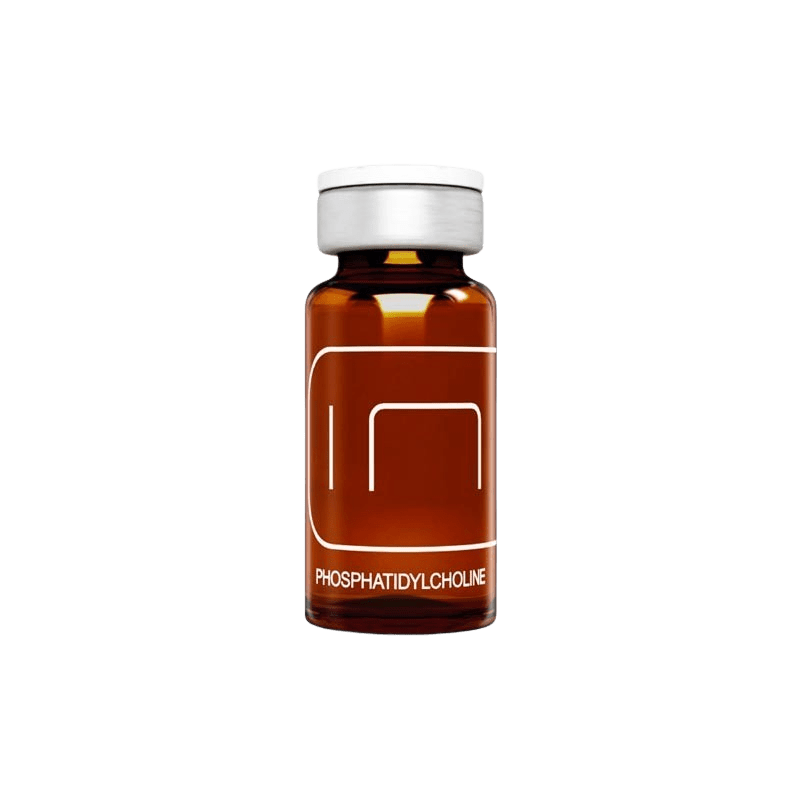
There are certain words that enter everyday conversation carrying a strange kind of authority. They sound polished, exact, almost too confident to question. Phosphatidylcholine is one of those words. It doesn’t drift into the room like a familiar habit or a home remedy passed between friends. It arrives dressed in syllables, with the crisp posture of something that belongs on a label, in a cabinet, or in a conversation where everyone suddenly lowers their voice.
What makes a name like that so compelling is not necessarily what people know about it, but what they imagine it represents. In a culture that has learned to admire precision, technical language can feel reassuring long before it feels understood. The word itself becomes part of the experience. It signals seriousness. It suggests refinement. It hints that somewhere, beyond the complexity of daily life, there may be a cleaner and more ordered explanation for how the body should feel.
The romance of specificity
Modern wellness language often borrows its confidence from science without always borrowing its patience. We are surrounded by products, routines, and ingredients that seem to promise a more tailored version of care. Not dramatic transformation, exactly. More like adjustment. Fine-tuning. The appeal lies in the suggestion that perhaps discomfort, fatigue, or uncertainty are not sprawling human experiences but solvable matters of calibration.
That is why names like this tend to stand out. They don’t sound rustic or nostalgic. They sound engineered. And for many people, that tone matters. In a crowded marketplace of promises, specificity can feel like credibility.
But there is also a softer story beneath that attraction. Sometimes people are not looking for miracles. They are looking for language that makes their effort feel purposeful. A technical ingredient can become a symbol of intention: proof that they are paying attention, searching carefully, trying to make sense of signals that often feel vague.
When a product becomes an idea
It is interesting how quickly certain items stop being just items. They become tiny cultural objects, carrying meanings that extend far beyond whatever container they come in. A vial, a capsule, a neat product page, a cleanly printed term that feels too precise for casual conversation—these details create an atmosphere. The product becomes an idea about modern self-management.
Seen that way, the interest around something like phosphatidylcholine is not only about the substance itself. It is about the way contemporary life trains us to look for targeted answers. We learn to trust the highly specific, the ingredient with the intricate name, the option that appears as though it has already been filtered through expertise.
There is a difference, though, between precision and certainty. The two often borrow each other’s clothes. A technical name can imply that the path ahead is clear, even when most people are responding more to tone than to knowledge. That isn’t necessarily a flaw in human judgment. It is simply one of the ways branding, language, and hope tend to overlap.
The aesthetic of being informed
We live in an era where looking informed can feel almost as important as being informed. Product culture reflects this beautifully. Minimal packaging, carefully chosen terminology, the quiet confidence of clinical design—these elements do more than present an item. They tell a story about the kind of person who notices it.
To pay attention to a niche ingredient is, in some settings, a form of identity. It suggests discernment. It says: I am not drifting through the aisle; I am curating. Even people who remain unsure what something fully means may still be drawn to the feeling of entering a more specialized conversation.
That feeling is real, and it helps explain why certain terms gather momentum. They promise access to a world that appears more exact than ordinary wellness chatter. If herbal language feels earthbound and broad, technical language feels elevated and selective. Neither is neutral. Both are emotional styles.
A brief glance at a product listing here captures that atmosphere better than any argument could. The presentation itself suggests a modern ritual: measured, deliberate, quietly specialized.
What the fascination really reveals
Often, our interest in these names reveals less about chemistry than about mood. We are living through a time of relentless self-observation. People track sleep, energy, focus, appetite, stress, attention, and all the subtle fluctuations in between. Under those conditions, almost any precise-sounding concept can become magnetic.
Not because people are gullible, but because daily life increasingly encourages us to see ourselves as adjustable systems. We become both subject and project, always watching for signs that a better setting might exist. In that atmosphere, a name like phosphatidylcholine can function almost like a placeholder for order. It suggests that complexity may yet be organized.
And maybe that is the deeper appeal: not certainty, but composure. A word that sounds technical can give the impression that someone, somewhere, has mapped the chaos.
Beyond the label
There is something worth noticing in that instinct. We don’t only seek products. We seek frames that make care feel less random. Sometimes those frames are nutritional, sometimes cosmetic, sometimes clinical in style, and sometimes simply linguistic. We are drawn to whatever gives shape to uncertainty.
So when a technical ingredient starts to circulate in conversation, it helps to see the broader picture. The fascination is rarely just about the thing itself. It is about trust, presentation, aspiration, and the modern desire to feel a little less at the mercy of our own unpredictability.
Some names arrive softly and blend into the background. Others arrive wearing a lab coat, and we listen differently.
https://medwholesalesupplies.com/product/phosphatidylcholine-5-vials-x-10-ml/