Some Names Enter the Room Before Meaning Does
A quiet look at how unfamiliar health names become part of everyday thought long before they become fully understood.
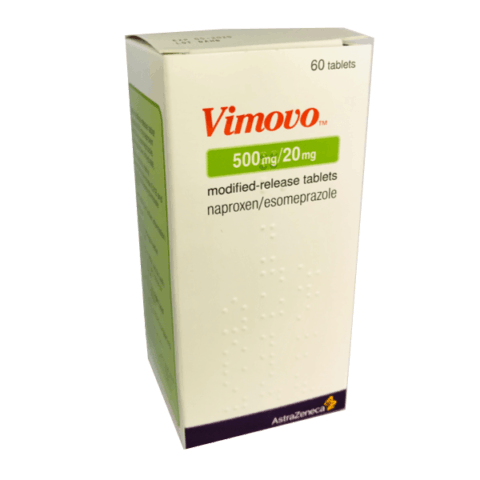
There is a peculiar moment that happens with certain words, especially the ones that arrive from pharmacies, waiting rooms, tabs left open too long, or conversations half overheard. A name appears first. Meaning follows later, if it follows at all.
That is often how people encounter something like Vimovo: not as a tidy concept, but as a small interruption. It shows up in a search bar, on a package, in a list, or in the quiet exchange between someone managing an ordinary day and the complicated reality of having a body. Before anyone knows much about it, the name itself starts doing cultural work.
The strange life of unfamiliar names
Modern life is crowded with names that sound precise yet feel distant. They carry the tone of laboratories, branding meetings, and systems designed to make things legible. But once those names leave official spaces, they enter a much softer world. They become part of family conversations, private routines, and the invisible architecture of daily decisions.
A name like this can feel oddly weighty even when a person knows very little about it. That is not because of hard facts alone. It is because health-related language tends to gather emotion around it. Concern, relief, hesitation, trust, skepticism, fatigue — all of it can cling to a word before anyone has fully unpacked what the word means.
And that may be one of the most interesting things about these encounters: they are rarely just informational. They are atmospheric. A person is not only meeting a product name. They are meeting a mood.
Between commerce and care
There is also something revealing about the place where these names are found. Not in textbooks for most people, and not in abstract discussions, but in storefronts, search results, and recommendation loops. Health now often meets people in the same digital spaces where they browse for household basics, compare subscriptions, or look for reviews before making the smallest purchase.
That blending changes the tone. It makes a serious topic feel strangely ordinary, and an ordinary moment feel more loaded than expected. The language of wellness, treatment, convenience, and choice all start to blur together. People are left to navigate not only what a name refers to, but what kind of feeling they are supposed to have about seeing it.
This is one of the quieter contradictions of contemporary life: the body remains deeply personal, yet many of the words surrounding it arrive through systems that are impersonal by design.
Recognition before understanding
Most of us have experienced that subtle shift from unfamiliarity to recognition. A name first looks like static. Then, after a few glimpses, it begins to feel known. Not understood, exactly — just familiar. And familiarity has a persuasive quality all its own.
That is true far beyond health. We trust songs we have heard twice. We warm to streets we have walked once before. We mistake repetition for intimacy all the time. With names connected to the body, that effect can feel even stronger, because the stakes seem closer. Recognition becomes a stand-in for comprehension.
Yet there is something worth noticing in that gap. The gap is where much of modern decision-making actually happens. Not in certainty, but in partial recognition. Not with mastery, but with a sense of having seen something often enough that it begins to belong to the landscape.
The emotional texture of routine
The most overlooked part of this world may be how quickly the extraordinary becomes routine. A term that once sounded opaque can become part of someone’s weekly rhythm. It moves from foreign to functional. It settles into drawers, calendars, habits, mental checklists.
That transformation says a lot about human adaptability. People are constantly absorbing complicated systems and turning them into livable patterns. They do this not because the systems are elegant, but because life keeps moving. Meals still need making. Messages still need answering. Laundry still needs folding. The body does not pause the rest of existence; it joins it.
So these names become woven into ordinary scenes. They sit beside grocery lists and alarm clocks. They become less like headlines and more like background furniture. There is something almost tender in that shift, even when it begins in uncertainty.
A small mirror of a larger culture
Maybe that is why a single unfamiliar name can reveal more than expected. It can reflect the way people now live with information: surrounded by it, shaped by it, and only occasionally given the time to sit with it. We are fluent in encountering things before we fully understand them. We build routines around fragments. We make room for ambiguity because, very often, we have no choice.
And perhaps that is the deeper story here. Not one product, not one label, not one search result, but the larger habit of modern attention. We meet a term. We carry it around. We let it gather meaning through context, repetition, and necessity. In the end, the name becomes less interesting than the human scene around it — the searching, the weighing, the ordinary persistence.
Some names arrive loudly. Others simply appear and remain. But either way, they remind us that meaning is rarely delivered all at once. More often, it accumulates quietly, in the places where information meets real life.