Some names sound more certain than we feel
A quiet look at how a single medicine name can carry more emotion, ritual, and expectation than we first notice.
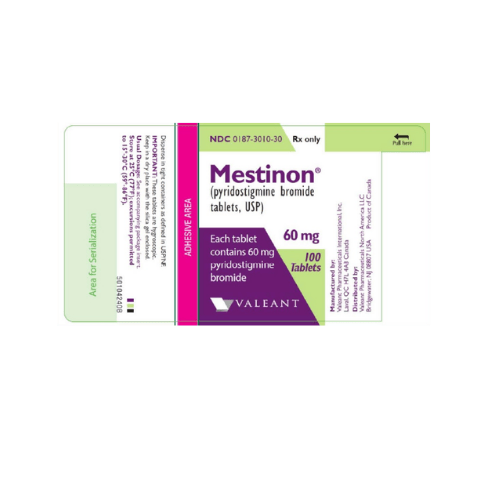
There’s something oddly powerful about the moment a medicine stops being an abstract category and becomes a specific name.
Until then, it lives in the blur of “a treatment,” “a prescription,” or “something the doctor mentioned.” But once it has a label, once it appears in a browser tab or on a box or in a conversation, it takes on a different kind of weight. It becomes part object, part idea, part atmosphere.
A name like Mestinon doesn’t tell most people much on its face. And maybe that’s part of what makes names like this so memorable. They arrive with a kind of authority that feels complete even when our understanding isn’t. The word sounds self-contained, finished, almost ceremonial. It doesn’t explain itself. It just appears and expects to be recognized.
When a word becomes a routine
Modern life is full of names we learn before we fully know what they mean. Apps, brands, conditions, devices, ingredients, subscriptions, compounds. We often meet the vocabulary first and the reality second. Medicine names fit neatly into that pattern, but they carry a deeper emotional charge because they drift into the private architecture of daily life.
A medicine name can move quickly from unfamiliar to intimate. At first it looks technical, almost distant. Then it finds its way into calendars, kitchen counters, pharmacy bags, note apps, family texts. It gets spoken casually, then carefully, then casually again. Over time, it stops sounding like a foreign word and starts sounding like part of the household.
That shift is easy to miss. We talk a lot about decisions, less about language. But language is often the first way uncertainty becomes manageable. Naming something doesn’t solve everything, of course. It simply gives uncertainty edges.
The strange confidence of labels
There’s also a cultural habit at work here: we tend to treat named things as more stable than unnamed ones. A label can create the illusion of neatness. It suggests there is a place for this, a category for this, a shelf where it belongs. Even when life feels messy, the name sounds organized.
That doesn’t mean people are fooled by packaging or terminology. It means names become small containers for hope, caution, skepticism, routine, and memory all at once. A single word can hold a remarkable amount of human weather.
Sometimes the name becomes shorthand for a whole chapter. Not just a product or a purchase, but a period of adaptation. A new rhythm. A set of questions that may never be fully dramatic enough for a movie scene, yet shape ordinary days in quiet ways. The word itself starts carrying those days with it.
And perhaps that’s why browsing something as straightforward as a product listing can feel unexpectedly loaded. It may look transactional on the surface, but it rarely stays there. The plainness of the page meets the complexity of the person reading it.
More than information, less than myth
We live in an era that encourages endless lookup behavior. Search first, compare later, keep scrolling. Yet some topics resist becoming cleanly informational, no matter how neatly they are presented. Medication names are among them. They may appear in highly practical settings, but they rarely remain purely practical in the mind.
A name can feel reassuring simply because it is repeatable. You can say it, write it down, recognize it later. Repetition makes room for familiarity, and familiarity often masquerades as certainty. But certainty isn’t always what people are actually experiencing. Often it’s something more layered: tentative trust, ongoing adjustment, watchful attention, reluctant acceptance, even fatigue.
That gap between appearance and feeling is deeply human. We like our systems crisp and our lives legible. We want words to settle things. Yet many of the words that enter our lives most forcefully do not settle anything at all. They simply accompany us while we keep figuring things out.
Maybe that’s why certain names linger. Not because they are beautiful words, and not because they are especially expressive, but because they become attached to moments when people are trying to make life a little more navigable. The name becomes a handle, even if the experience remains complicated.
In that sense, the fascination isn’t really about one medicine name alone. It’s about the way modern people build familiarity around what once felt opaque. We learn the term, then the timing, then the place it occupies in conversation. The word enters the room before understanding does, and somehow that is often enough to begin.
There’s a quiet poignancy in that. A label can never carry the whole story. Still, we keep giving names a lot to hold.