Some objects are smaller than the routines built around them
A quiet look at how tiny, precise objects can take on an outsized place in the choreography of everyday life.
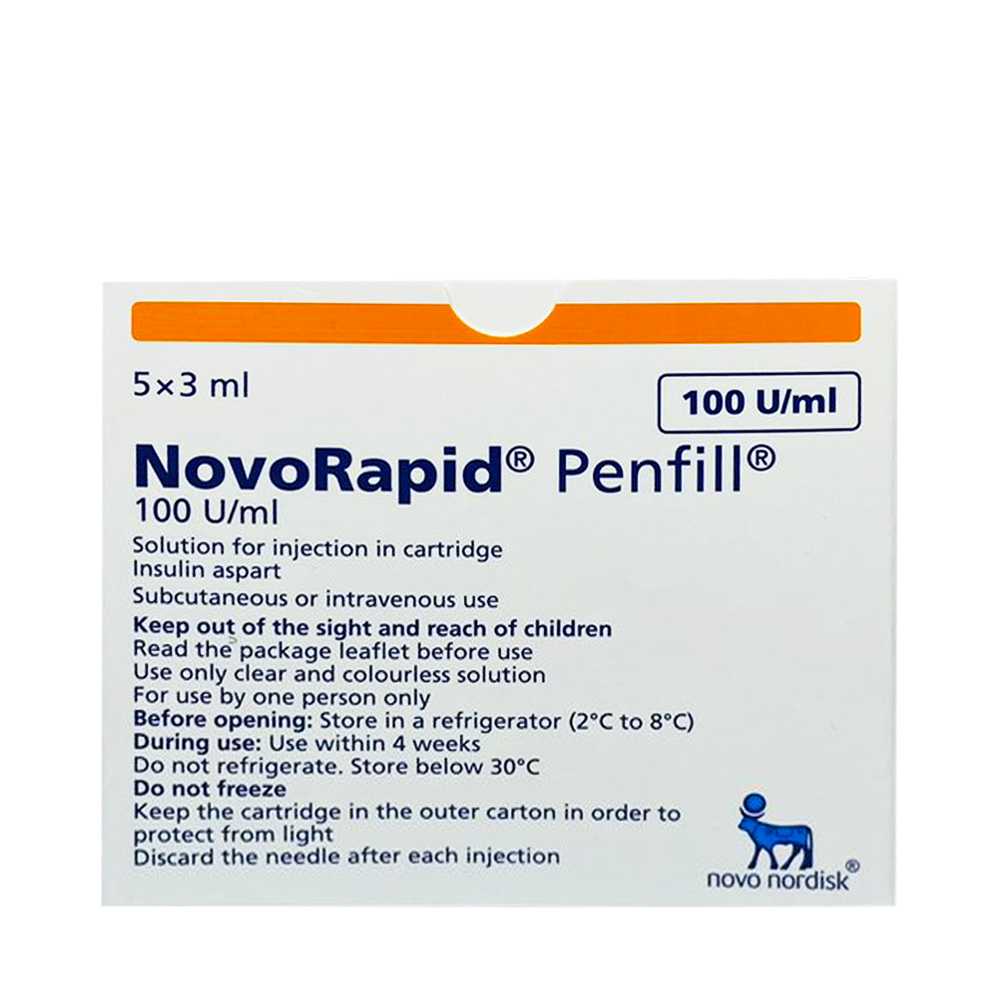
There is something strangely modern about a product name that sounds fast, clean, and slightly futuristic, then ends in a word as plain as cartridge. It feels like the meeting point between urgency and routine, between branding and the quiet mechanics of everyday life.
I found myself thinking about that tension when I came across the Novorapid cartridge. Not as a piece of technical information, and not as a question to solve, but as an object with a particular presence in the world. Some things are like that. You notice them first as packaging, as language, as a shape that suggests purpose. Only later do you realize they belong to a much larger story about habits, timing, and the invisible architecture of ordinary days.
The small object with a full schedule
A cartridge is not the kind of word that usually invites reflection. It sounds practical, replaceable, almost anonymous. It belongs to the family of objects designed not to be admired but to be used, slotted in, carried along, remembered at exactly the right moment. And yet those are often the objects that reveal the most about how people live.
There is an entire category of modern life built around compact precision. Chargers. Cases. Refill pods. Little sealed components that ask for care without asking for attention. They sit in drawers, bags, pockets, bathroom shelves, travel kits. They become part of the background until the background suddenly matters.
That, perhaps, is why product names like this feel larger than they look. They are never just about the object itself. They are about the routines that gather around it: the checking, the planning, the preference for having one nearby, the subtle calculations that shape a day before anyone else notices.
Speed as a mood
The “novo” and the “rapid” of a name like this carry their own cultural charge. We live in an era that loves the language of efficiency. Fast signals competence. New suggests improvement. Even when we know better than to trust every sleek promise, those words still work on us. They fit the rhythm of a world that expects tools to be immediate and seamless.
But the human reality around any carefully designed object is rarely seamless. It is usually made of memory, repetition, occasional inconvenience, and the kind of quiet responsibility that never becomes social media content. That is what makes these items interesting from a distance. Their marketing vocabulary may sound brisk, but the life around them is often patient, deliberate, and deeply personal.
There is a subtle contradiction there that feels very contemporary: the object is optimized, but the person is still human. The name points toward speed; the routine around it often depends on steadiness.
What design quietly admits
Cartridges are also honest in a way many products are not. They admit that life runs on systems. They do not pretend to be romantic or transformational. They are built to fit into something else, to work within a process, to be part of a sequence rather than the center of it.
That can sound unglamorous, but it also feels oddly truthful. Most of the things that hold a day together are not dramatic. They are modular. They are repeated. They rely on being available when needed. If you pay attention, a cartridge becomes less a product and more a symbol of how much of modern living depends on these small acts of alignment.
Even the physicality of the idea matters. A cartridge suggests containment, measure, readiness. It is a reminder that some of life’s biggest concerns are handled through surprisingly modest forms. Not sweeping gestures. Not grand declarations. A small object, designed to do its part.
The private side of visible things
Another reason this category of object lingers in the mind is that it sits at an unusual social threshold. It is personal without necessarily being expressive. People may carry it, store it, keep track of it, but it does not function like a fashion item or a gadget people show off. It belongs to a quieter relationship with necessity.
And quiet relationships with necessity tend to reveal character. They show how much daily life is shaped by what must be remembered, packed, replaced, or kept within reach. Not all routines are chosen in the airy, lifestyle-magazine sense of the word. Some are simply built because life asks for them.
There is dignity in that, though it often goes unnoticed. A lot of adulthood, really, is just learning how to make room for the things that keep everything else possible.
More than a label
Seen that way, a name like Novorapid cartridge stops being just a listing on a product page and starts to feel like a tiny cultural artifact. It carries traces of science, commerce, design, habit, and the deeply non-theoretical business of getting through a day.
Maybe that is why such objects are worth a second glance. They remind us that everyday life is not only shaped by big ideas, public milestones, or visible technologies. Sometimes it is shaped by the smallest things imaginable: the item in a pouch, the spare in a drawer, the thing that is easy to overlook unless it is suddenly absent.
And perhaps that is the most revealing part of all. The objects we barely talk about are often the ones around which real life is most carefully arranged.