Some objects enter a room quietly and still change the mood
A small device can feel less like a gadget and more like a ritual, revealing how measurement slips into the texture of ordinary life.
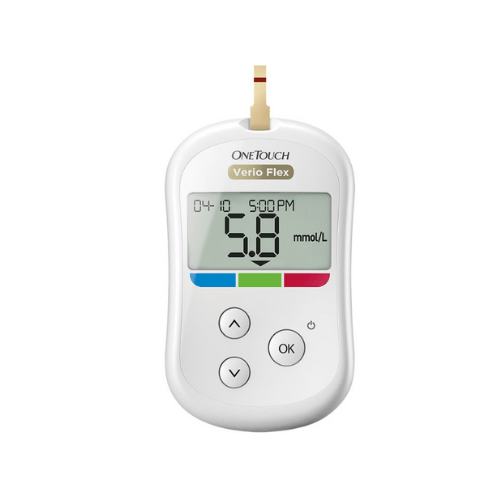
There are objects that announce themselves with noise, brightness, or ambition. And then there are the quieter ones: the things that sit in a drawer, travel in a bag, or appear on a kitchen counter without asking for much attention at all. A compact meter belongs to that second category. It does not pretend to be glamorous. It simply becomes part of the atmosphere of daily life.
What fascinates me about devices like this is not just what they do, but how they change the choreography of a day. The modern world is full of tools that translate uncertainty into numbers, signals, colors, and tiny acts of confirmation. We increasingly live beside screens that reassure, remind, and occasionally interrupt. Yet the smallest devices often feel the most intimate, because they are woven into routine rather than spectacle.
The design of reassurance
A meter is easy to underestimate because it is small. But small objects have a way of carrying disproportionate meaning. A set of keys can represent freedom. A ring can represent a promise. A pocket notebook can represent intention. In the same way, a measuring device often becomes more than its plastic shell and display. It starts to symbolize preparedness, awareness, and the wish to feel a little more steady inside a world that rarely holds still.
That may be why product design matters so much in categories like this, even when people pretend it does not. The shape of a device, the calmness of its screen, the ease of holding it, the visual cues it offers — all of that speaks a language beyond utility. Good design does not only help a tool function. It changes whether the tool feels burdensome, neutral, or strangely comforting.
When routine becomes identity
There is also something deeply human about the way repeated actions become part of self-perception. We rarely notice this while it is happening. A person begins by “using a device,” but over time the device takes on a role in the background story of who they are: organized, attentive, adaptable, cautious, practical, resilient. Everyday rituals have a quiet power to shape emotion, and tools that accompany those rituals are never just inert objects.
This is where the conversation around health-related products often becomes more interesting than the products themselves. People do not merely want information; they want a relationship with information that feels livable. A number on a screen can be factual, but the experience of seeing it is personal. The device becomes a kind of interface between data and mood, between intention and interpretation.
I think that is partly why even a product page like this one can hint at a larger story. Not a grand technological revolution, but a quieter one: the effort to make moments of checking, noticing, and responding feel less mechanical and more manageable.
The emotional life of practical objects
We tend to reserve emotional language for dramatic possessions — a first car, a family photograph, an old letter. But ordinary tools gather feeling too. The mug someone reaches for every morning. The pen they trust. The charger they always pack. These things become extensions of habit, and habit is one of the deepest forms of comfort people know.
A small meter can live in that same territory. It may never be described as beloved, yet it can still become familiar in the most meaningful sense of the word. Familiarity is not always affection. Sometimes it is simply relief. Relief that an object behaves as expected. Relief that it is there when needed. Relief that one part of life, at least, has a system.
That may sound like a small thing, but small things are often what make modern life bearable. People are asked to manage work, messages, schedules, errands, forms, passwords, appointments, and an endless stream of invisible obligations. Against that backdrop, any object that helps create a sense of orientation can matter more than it first appears.
Quiet technology, human scale
The most interesting technology is not always the most futuristic. Sometimes it is the technology that steps back and lets a person feel more like themselves. Not dazzled. Not overwhelmed. Just accompanied. There is a difference between a device that demands attention and one that supports a rhythm.
That distinction says something larger about the culture we are building around personal tools. We are moving, perhaps unevenly, toward products that do not just perform a function but fit into emotional reality. The goal is not only precision or efficiency in the abstract. It is usability in the lived sense: can this exist beside a real morning, a real commute, a real tired evening?
Maybe that is why these understated objects keep pulling focus. They reveal that convenience is never only convenience. It is also dignity, privacy, predictability, and the desire to move through a day with fewer frictions. A small meter may seem like a niche object from a distance. Up close, it belongs to a much bigger story — the story of how people use design to make uncertainty feel a little less loud.
https://canadianinsulin.com/product/onetouch-verio-flex-meter/