Some routines arrive quietly and change the room
The most ordinary objects often carry the deepest rituals, not because they ask for attention, but because they become part of how a day holds together.
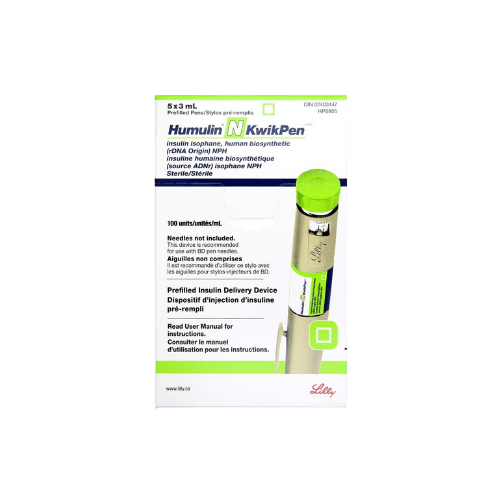
There is a particular kind of object that doesn’t announce itself as important. It sits in a drawer, a bag, a kitchen corner, a coat pocket. It doesn’t belong to the world of display. No one talks about it the way they talk about new gadgets or beautiful tools. And yet, in the private architecture of daily life, it can become one of the most meaningful things a person owns.
That is what makes items like the Humulin N KwikPen feel so culturally interesting. Not because they are glamorous, and not because they invite fascination in the usual consumer sense, but because they reveal how much of modern life is built around quiet systems of care.
The design of the unnoticed
Some products are made to be admired. Others are made to disappear into routine. There is something almost profound about that second category. When an object is built for repetition, portability, and familiarity, it starts to tell a different story than most things we buy. It stops being about novelty. It becomes about trust, rhythm, and the relief of knowing what belongs where.
That shift matters. We live in a culture obsessed with optimization, yet much of real life is sustained by something less dramatic: dependable rituals. The cup set out the night before. The keys returned to the same bowl. The small item carried everywhere because forgetting it would change the tone of the day.
These routines rarely look cinematic. They are not the kind of habits people post about with dramatic captions. But they are often the habits that hold life together.
Everyday life has its own choreography
If you pay attention, you start to notice how many people move through the day with invisible checklists. Not the ambitious kind written in planners, but the deeply personal kind shaped by experience. Has everything come along? Is the bag packed the right way? Is there enough time before leaving? Is the familiar object where it is supposed to be?
These motions create a choreography of reassurance. They may look small from the outside, but inside a person’s day they carry weight. They are about steadiness. About reducing friction. About turning uncertainty into something manageable.
A product name on a package can sound technical, almost impersonal. Yet once it enters someone’s routine, it stops being abstract. It becomes part of the texture of mornings and evenings, errands and travel, ordinary interruptions and little acts of preparation. The language around it may remain clinical, but the lived experience around it is intensely human.
Private objects, public silence
One of the strangest things about care-related routines is how often they remain invisible in shared spaces. Offices, airports, restaurants, long drives, family visits—people carry all kinds of unseen negotiations into these places. The public setting says, behave as though everything is simple. Real life says otherwise.
That gap creates a peculiar kind of silence. Many of the most important routines are barely discussed unless they become inconvenient. We tend to celebrate spontaneity, but much of adulthood is really an ongoing relationship with preparation. Not fearful preparation. Just practical, thoughtful, unshowy readiness.
In that sense, products connected to daily management tell a bigger story about contemporary life. They remind us that independence is often supported by systems, and systems are often supported by objects small enough to fit in your hand.
The emotional life of familiarity
There is comfort in recognizing something instantly: its shape, its place, the way it fits into a sequence of actions you no longer need to narrate to yourself. Familiarity has a calming effect. It reduces the number of decisions the day demands. And in a time when nearly everything seems to ask for more attention, that kind of simplicity feels almost luxurious.
Not luxurious in the glossy sense. More like emotional efficiency. A quiet reduction of mental noise.
This may be why routine objects can take on a surprisingly intimate role. They become markers of continuity. On chaotic days, they suggest that not everything is up for negotiation. Some things remain stable. Some gestures still make sense even when the rest of the schedule falls apart.
More than a product page
It is easy to look at a listing, a label, or a branded item and assume the story begins and ends with the product itself. But that is almost never true. The more revealing story lives around it: the drawer it is kept in, the habit attached to it, the travel plan adjusted for it, the sense of relief when it is within reach.
Objects like this tend to resist dramatic storytelling because they are embedded in repetition. Yet repetition is where much of life actually happens. Not in milestones, but in maintenance. Not in spectacle, but in return.
And maybe that is why seemingly ordinary tools deserve a more thoughtful kind of attention. They show us a version of human life that is easy to overlook: the version built on quiet competence, adaptation, and care that does not ask to be admired in order to matter.
Some routines arrive quietly. Then, over time, they do something remarkable. They change the room—not by demanding attention, but by making daily life more livable, more navigable, and a little less uncertain.
https://canadianinsulin.com/product/humulin-n-kwikpen-100-units-ml/