Some Solutions Arrive More Quietly Than Expected
Not every care decision announces itself. Some enter the room softly, shaped by routine, trust, and the hope of easing a hard day.
There is something quietly revealing about the way people talk about care when it involves an animal.
The language changes. It becomes less performative, less polished, less interested in sounding knowledgeable for its own sake. A person who might debate restaurants for half an hour or compare phones with almost theatrical certainty can become startlingly humble when a pet is uncomfortable. Suddenly the conversation is about watching, waiting, noticing. About the look in the eyes, the shift in posture, the way a familiar routine becomes slightly off-center.
That is partly why products associated with veterinary treatment often carry a strange emotional weight. They may appear, at first glance, to be simple items in a catalog or names on a label, but they exist in a more charged landscape than most purchases ever do. They belong to those moments when care becomes practical. Not sentimental in the abstract, but immediate. Bodily. Real.
The feeling behind the decision
An injectable treatment, in particular, has a different cultural presence than something casual or everyday. It sounds decisive. It sounds like a threshold has been crossed from vague concern into something more direct. Even for people who are not especially anxious, that format tends to signal attention, seriousness, and a trust in expertise that goes beyond browsing shelves or reading packaging.
But what stands out is not drama. It is the opposite. The real texture of these moments is usually ordinary: a car ride, a waiting room, a leash looped around a wrist, a hand resting on a back, the quiet hope that comfort might return sooner rather than later. The emotional atmosphere is rarely cinematic. It is made of small gestures and held breath.
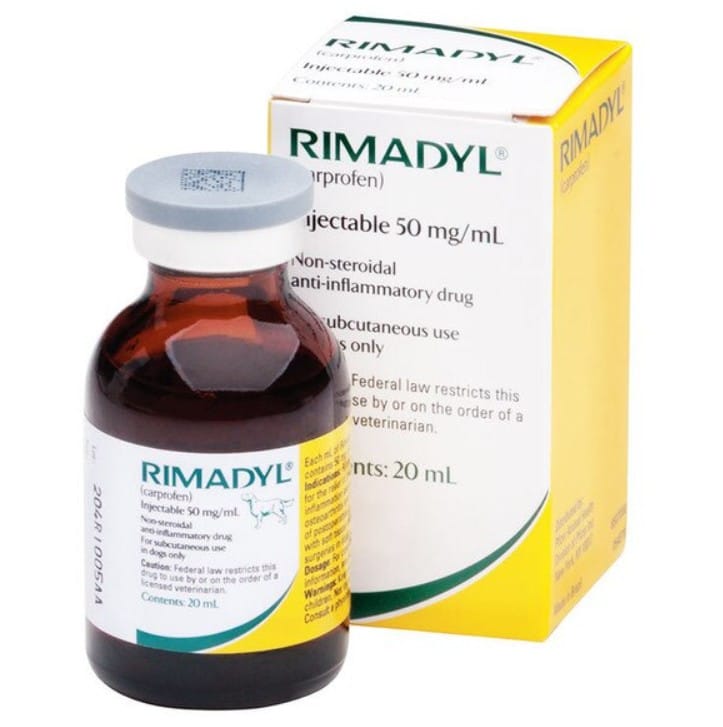
That is why a listing like Rimadyl Injectable can feel like more than a product name in the abstract. It sits inside a wider story people know instinctively: the wish to do something useful when a creature you love cannot explain what hurts.
Care has its own kind of vocabulary
Modern life trains us to expect instant clarity from everything. We want labels that settle the matter, choices that feel obvious, and outcomes that fit neatly into before-and-after thinking. Care rarely behaves that way.
Especially with pets, people often live in a world of interpretation. They notice changes in appetite, energy, enthusiasm, or patience. They replay the day in their heads. Was the walk too long? Was that movement slower than usual? Is this passing, or is it the beginning of something that needs closer attention?
In that atmosphere, the tools of care become symbols as much as objects. Not because anyone romanticizes them, but because they mark moments when uncertainty starts being shared. A concern that lived privately at home is now carried into a professional setting, named, examined, and answered in some form. The emotional shift there is significant. Relief does not always come from certainty alone. Sometimes it comes from no longer holding the question by yourself.
Why these details stay with us
People remember odd things from caregiving experiences. The sound of the exam room door. The way their pet settled afterward. The strange calm that follows a tense decision. The receipt folded into a pocket. The sense that a difficult day became manageable not because it was pleasant, but because it moved.
That may be why even highly specific veterinary products can take on a life beyond their packaging. They become part of family memory. Not in a dramatic scrapbook sense, but in the subtle archive everyone keeps: the winter something changed, the week of extra gentleness, the afternoon when a trusted routine returned.
There is also a broader cultural truth underneath all this. We increasingly describe pets as family, but the phrase only means something when it survives contact with inconvenience, worry, scheduling, cost, and emotional fatigue. Care is not proven by affectionate language alone. It shows up in attention. In follow-through. In allowing another being’s discomfort to rearrange your day.
The quiet dignity of doing what the moment asks
Maybe that is what makes this category of care feel so distinct. It is not glamorous, and it is not meant to be. It belongs to a humble part of love: the part that responds.
Not every act of devotion looks warm and storybook-soft. Some of it looks procedural. Some of it sounds like questions, appointments, and practical decisions made without fanfare. Some of it is simply choosing not to ignore what you noticed.
And that, in its own understated way, is deeply moving.
We often think meaningful care will feel profound while it is happening. More often, it feels administrative, slightly tense, and very ordinary. Only later do we realize that these were the moments that defined the relationship most clearly. Not because they were beautiful in the usual sense, but because they were honest. They asked for patience instead of performance.
In the end, that may be why seemingly technical veterinary terms can linger in memory. They are tied to the hours when affection became action, when concern took form, and when the bond between human and animal was expressed not through words, but through the quiet determination to help.