Some tools are designed to disappear
A quiet look at why certain objects in modern life are made to feel simple, private, and almost invisible.
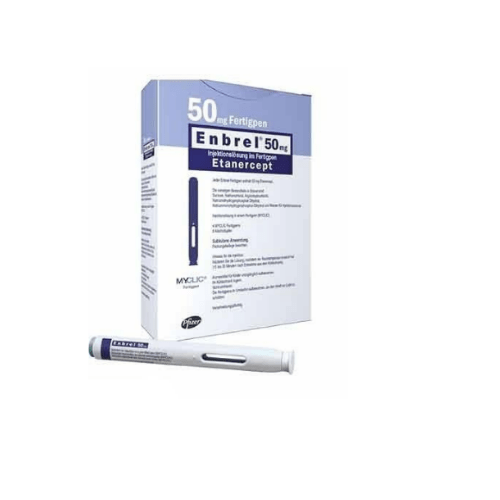
There is something striking about the objects designed for deeply personal routines: they rarely announce themselves. They are not built to be admired in the way a watch is admired, or discussed in the way a new phone is discussed. Instead, they aim for the opposite. They are shaped around reassurance, around familiarity, around the hope that a difficult moment might feel a little more manageable simply because the tool itself asks so little of the person holding it.
That idea came to mind while looking at the language and design cues around a product like the Enbrel pre-filled SureClick auto injector. Even without turning it into a technical discussion, the phrasing reveals a lot about the world we live in. “Pre-filled.” “Auto.” “Click.” Each word carries the mood of modern convenience. Not glamour, not excitement, but a kind of careful reduction. Fewer steps. Fewer decisions. Less visible friction.
The age of making things feel easier
We live in a time when almost every system is being redesigned to remove hesitation. Doors slide open. Payments happen with a tap. Cars warn us when we drift. Apps finish our sentences. Across all kinds of products, the same design philosophy keeps appearing: if something can be simplified, it probably will be.
What is interesting is how differently that simplicity lands depending on the situation. In entertainment, convenience feels indulgent. In work, it feels efficient. In private health routines, it feels emotional. Ease is no longer just a feature. It becomes part of the experience of coping, adapting, and carrying on with ordinary life.
That may be why certain devices end up feeling less like “products” and more like quiet companions to routine. Their success is measured not by how memorable they are, but by how unintrusive they become.
Design that tries not to feel like design
There is a paradox here. A lot of effort goes into making something seem effortless.
The most thoughtful objects often hide their complexity behind plain language and simple gestures. A click. A cap. A shape that fits the hand. A name that suggests certainty. None of this is accidental. It reflects a larger cultural preference for interfaces that calm rather than challenge.
And yet, beneath that calm surface is something more human than technological. The need is not only for function. It is also for confidence. People don’t just want tools that work; they want tools that reduce the feeling of having to master something difficult alone.
That is why minimal design can feel so meaningful. It does not merely streamline a task. It can soften the emotional edges around it.
The private theater of routine
There are routines we perform publicly and routines we protect. Making coffee has become a lifestyle ritual. Going to the gym is social enough to become content. But many forms of self-management remain quiet, almost hidden in the architecture of daily life.
A device associated with those moments exists in a different cultural category. It belongs to the drawer, the bathroom cabinet, the travel pouch, the small systems people build to keep life moving. It is ordinary in one sense and deeply charged in another. Not dramatic, but intimate.
This is where modern product language becomes especially revealing. Terms that sound mechanical on paper can actually be signals of emotional intent. They suggest predictability. They suggest repetition without reinvention. They suggest that maybe, with the right design, a person can spend less attention on the object and more on the rest of their day.
When convenience becomes a form of dignity
We often talk about convenience as if it were shallow, as if it belongs only to food delivery and one-click shopping. But there is another side to convenience that feels more serious and more humane.
Sometimes convenience means preserving energy. Sometimes it means reducing uncertainty in a moment that already carries enough of it. Sometimes it means allowing a person to feel less defined by the process they have to repeat.
That is a subtle kind of dignity: not making a routine larger than it needs to be.
In that sense, the best-designed personal tools are almost architectural. They create a smoother path through a moment someone may not want to linger in. They do not erase reality, but they can reduce the sense of obstruction.
Why names like this sound the way they do
Even the naming style tells a story. Contemporary product language often blends reassurance with precision. It wants to sound dependable, streamlined, and slightly technical without becoming cold. The result is a vocabulary of engineered calm.
That may be why these names can feel so oddly memorable. Not because they are poetic, but because they are trying to resolve a tension: the meeting point between vulnerability and control. A person may be dealing with something complicated, but the object in their hand is trying to say, in effect, let this one part be simpler.
There is something profoundly modern about that promise.
And maybe that is the larger observation here. Many of the most important objects in our lives are no longer trying to stand out. They are trying to stand aside. Their role is to support, not perform; to assist, not dominate. In a culture that often celebrates the loudest and newest thing, there is something quietly powerful about tools designed to disappear into routine and leave a little more room for living.
https://borderfreehealth.com/shop/enbrel-pre-filled-sureclick-auto-injector/