The Body Has a Quiet Way of Interrupting a Day
Sometimes discomfort arrives not as drama, but as a change in pace, posture, and the way a person moves through ordinary hours.
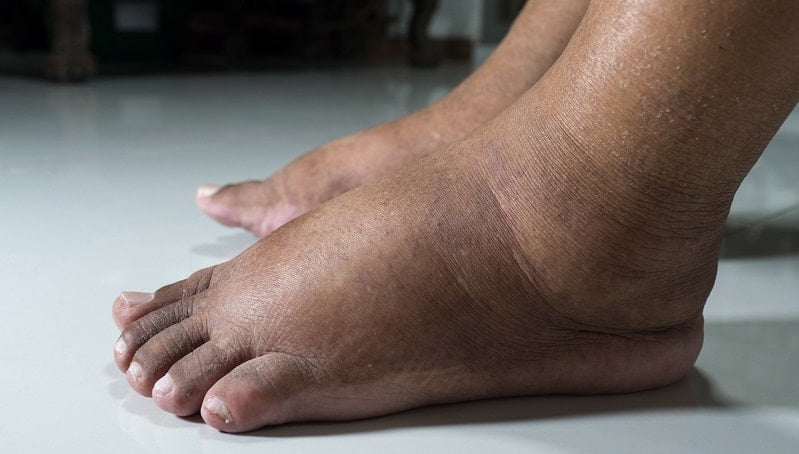
There are some changes in the body that announce themselves loudly, and others that arrive by altering the mood of a day.
Swelling in the feet or lower legs belongs to that second category. It can turn walking into negotiation, shoes into small arguments, and familiar routines into something slightly more deliberate. What makes it feel so unsettling is not only the physical sensation, but the way it changes a person’s relationship to ordinary life. The body, suddenly, is no longer background.
We tend to speak about health in dramatic language, as if every signal must be urgent to matter. But many people first notice something is off in quieter ways: a sock leaving a deeper mark than usual, a step that feels heavier by evening, a sense that standing still has become unexpectedly noticeable. Even the image of “weeping” legs carries a kind of emotional charge. It sounds less like a technical phrase and more like the body expressing strain in a language nobody wants to learn firsthand.
When movement stops feeling automatic
One of the most overlooked things about discomfort in the feet and legs is how quickly it reshapes identity. A person who thinks of themselves as brisk, self-sufficient, always moving, may suddenly become more cautious without meaning to. They pause before errands. They think about where they will sit. They reconsider how long a trip across a parking lot really feels.
That shift can be surprisingly intimate. So much of modern life assumes mobility as a silent constant. We celebrate productivity, momentum, getting things done. But the lower half of the body is where all that ambition meets gravity. When that area feels different, the whole mythology of “pushing through” starts to wobble.
This is partly why topics like this linger in conversation. They are not just about symptoms. They are about interruption. They force a person to notice details that usually remain invisible—pressure, weight, friction, fatigue, the architecture of a staircase, the patience required to get through a normal afternoon.
The private sociology of visible discomfort
There is also a social layer to all of this. Feet and lower legs occupy a strange place in the cultural imagination: essential, overworked, and rarely granted much dignity. They are hidden when possible, joked about when discussed, and often ignored until they become impossible to ignore.
Visible swelling changes that bargain. It can make someone feel observed in ways they did not ask for. The body becomes legible to others. A glance downward from a stranger, a question from a relative, a moment of hesitation before slipping on shoes at someone else’s house—these can feel small, but they accumulate.
That is why people often go looking not only for information, but for recognition. A page like this discussion of the topic is rarely just about naming a condition. It is also about finding language for an experience that can feel oddly isolating.
Not every difficult thing looks dramatic
There is a cultural tendency to rank discomfort by spectacle. If something is not cinematic, it gets downgraded. Yet many of the most life-altering experiences are repetitive rather than explosive. They show up at the end of the day. They alter pace rather than stop time. They ask for attention in increments.
That may be why swelling in the feet and legs can feel misunderstood. It does not always match the storyline people expect when they think about physical distress. There may be no singular moment, no neat narrative arc, just a gradual realization that the body is asking not to be overlooked.
And in that realization, there is often a subtle emotional turn. Irritation gives way to curiosity. Embarrassment gives way to observation. The person begins to notice patterns, not in a diagnostic sense, but in a human one: when things feel easier, when they feel more noticeable, how mood changes when movement changes.
The lesson hidden in small signals
If there is a larger cultural message here, it may be this: we are not especially good at respecting low-volume forms of difficulty. We admire endurance so much that we sometimes miss the intelligence of paying attention.
The feet and legs, after all, are where daily life becomes literal. They carry routines, responsibilities, habits, and assumptions. When they feel strained, the day itself feels different. That does not make the experience dramatic; it makes it deeply human.
Maybe that is why subjects like this continue to draw interest. They sit at the intersection of vulnerability and practicality. They remind us that health is not only about major turning points. Sometimes it is about noticing when an ordinary act—standing, walking, waiting—starts to feel less ordinary than it used to.
And perhaps that is the quietest truth of all: the body does not always interrupt life with a shout. Sometimes it does so by changing the way a person moves through a room, one careful step at a time.