The Names We Trust Before We Understand Them
Some health terms arrive like labels, others like stories. The difference says more about modern life than we usually admit.
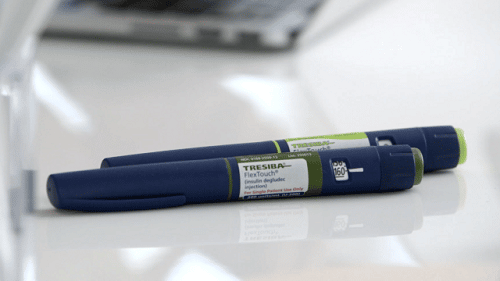
There is a peculiar moment that happens when a medical term enters everyday language. It stops sounding like science and starts sounding like part of a routine. A name appears on a box, in a pharmacy conversation, in a family text thread, and suddenly it belongs to ordinary life, even if almost no one feels fully fluent in what it means.
Insulin degludec is the kind of term that creates that moment. It has the polished, distant texture of something designed in a lab, yet it quickly becomes part of a much more human world: habits, reassurance, memory, and the quiet logistics of managing a body over time. Long before most people could explain its classification or distinguish it from a brand label, they may already recognize the shape of the name, or the tone it carries.
When language does more than inform
We often pretend that medicine is only about function, but language does a surprising amount of emotional work. Generic names can sound formal, almost architectural. Brand names, by contrast, often feel smoother, easier to repeat, more social. One belongs to the realm of categories; the other enters conversation.
That split says something about modern life. We are surrounded by systems that sort, classify, and standardize, but we still rely on names that feel familiar enough to hold onto. A drug class may matter in one setting, while a brand name matters in another, and neither fully captures the lived experience of the person who has to remember it, ask for it, or hear it spoken aloud.
This is part of why a topic like this draws attention. Not because everyone wants a technical breakdown, but because people are trying to place a term inside a larger map. What is it called? Where does it belong? Is it one thing, or part of a family of things? Those questions are not only scientific. They are deeply cultural. They reflect how we make unfamiliar language manageable.
The comfort of categories
There is a quiet comfort in classification. To know that something belongs somewhere can make it feel less mysterious. In daily life, categories act like handrails. They do not tell the whole story, but they reduce the feeling of standing in front of a wall of unknowns.
That may be why pages that sort out names and classes often attract attention. They are not always read with urgency. Sometimes they are read out of curiosity, or because a term has been seen before and never quite settled into memory. Sometimes a person just wants the relief of seeing a complicated phrase placed into recognizable order.
Still, classification has limits. It can organize information without capturing experience. A label may tell you what shelf something belongs on, but not what it feels like to encounter that label repeatedly in real life. The emotional texture of a health routine is rarely visible in the neatness of a category.
Brand names as social shorthand
Brand names have a strange cultural role. They are often easier to remember, easier to pronounce, and easier to pass between people. In conversation, they can work like shortcuts, turning something technical into something portable. That portability matters more than we often admit.
A generic term might signal precision, but a brand name often signals recognition. It becomes the version that circulates in waiting rooms, kitchens, and casual exchanges. Not because it is inherently more important, but because it fits more naturally into spoken life.
This can create a subtle illusion that the more familiar name is the fuller story. But familiarity is not the same as understanding. In many areas of health, we move through a landscape built from both official terminology and lived shorthand. One tells us how systems see a thing; the other tells us how people carry it.
A recent piece on the subject at Canadian Insulin points toward exactly that tension: the gap between formal naming and the everyday need to make a term understandable.
More than a definition
What makes topics like this interesting is that they reveal how people approach uncertainty. Rarely does someone begin with pure scientific curiosity alone. More often, they begin with a small friction point: a name that sounds familiar but not clear, a category mentioned without context, a sense that everyone else understands the vocabulary better than they do.
And so the search begins, not always for deep expertise, but for orientation.
That is a very contemporary instinct. We live in a time of searchable language, where the first response to confusion is often to look up the terms themselves. But even then, what many people are really seeking is not just a definition. They are looking for narrative. They want to know how one term relates to another, why there are multiple names, and what kind of idea they are actually holding.
The hidden human part
Behind every technical label is a quieter story about adaptation. People learn new vocabularies because they have to, because someone they love has to, or because modern life asks them to navigate systems that come with their own language. Over time, words that once felt dense and foreign become ordinary. They lose some of their sharpness. They become part of the furniture.
That transformation is easy to overlook, but it matters. It shows how human beings absorb complexity: not all at once, and not always neatly, but through repetition, context, and use. A term like insulin degludec may begin as a puzzle of syllables, yet eventually it becomes another example of how unfamiliar language settles into daily rhythm.
Maybe that is the real story behind names and classes. Not simply what they denote, but how people slowly make room for them. In the end, understanding often begins less with mastery than with recognition — the moment a difficult term stops feeling distant and starts feeling like something a person can carry.
https://canadianinsulin.com/articles/insulin-degludec-brand-names/