The Quiet Doubt Behind a Lifted Reflection
A reflective look at the hesitation, hope, and cultural mood surrounding subtle aesthetic change.
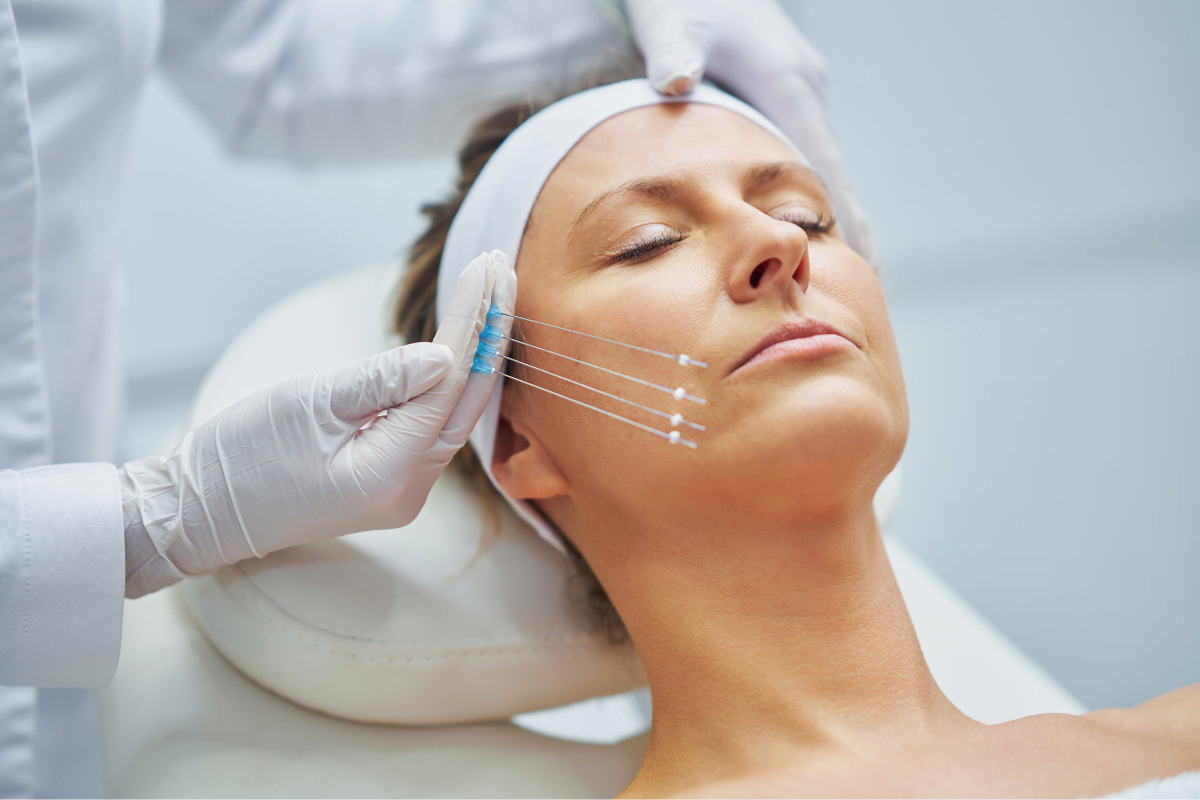
There is a particular kind of beauty conversation that happens in whispers. Not because it is shameful, exactly, but because it lives in the delicate space between curiosity and caution. Someone mentions a subtle procedure over coffee. A friend says they have been “thinking about doing something.” A face in the mirror becomes less of a fact and more of a question.
Thread lifts belong to that modern category of aesthetic ideas that sound almost too neat: less dramatic than surgery, more intentional than skincare, wrapped in the language of freshness, lift, and small intervention. They sit comfortably in the era of the barely noticeable adjustment, where the dream is not transformation but looking as if nothing much happened at all.
And yet, the more quietly something is marketed, the more interesting the hesitation around it becomes.
The appeal of almost invisible change
Contemporary beauty culture has grown fond of subtlety. The old vocabulary of makeovers feels too loud now. Many people are not chasing a new face; they are chasing a familiar one under better lighting. They want to look rested, softened, rebalanced, or simply closer to an internal image that has not quite kept pace with time.
That is partly why minimally framed treatments attract attention. They seem to offer a middle ground between doing nothing and doing something major. They appeal to the person who does not want a dramatic announcement written across their features.
But subtle change still asks for trust. It asks someone to believe not only in the technique, but in the setting, the person performing it, the aftercare expectations, and their own ability to live with the waiting period afterward. The promise may be small, but the emotional investment rarely is.
When beauty becomes logistics
One of the least glamorous parts of aesthetic decision-making is how quickly fantasy gives way to logistics. The imagined result may be elegant and effortless, but the path toward it is filled with ordinary questions. Where would it be done? Who would be involved? What would the room feel like? How much time would be needed afterward? What would one tell people, if anything?
These questions are not merely practical. They reveal how personal the decision really is. A beauty treatment is never just about appearance. It can touch work schedules, social plans, privacy, confidence, and that strange psychological gap between choosing something and waiting to see how it settles.
The word “recovery” often sounds clinical, but in real life it can mean something softer and more human: staying in for a few days, studying one’s reflection too closely, wondering whether every sensation is meaningful, resisting the urge to narrate the experience to everyone or no one.
The cultural pressure to seem casual
There is also a modern pressure to be casual about aesthetic work. To say it was no big deal. To act informed, relaxed, and unbothered. The internet has trained people to consume beauty procedures as bite-sized before-and-after stories, as if uncertainty can be edited out between two images.
But people are rarely that simple. A person can be excited and nervous at the same time. They can want change and still worry about it. They can be drawn to the idea of a lifted appearance while also feeling protective of the face they already know.
That contradiction deserves more space than it usually gets. Wanting to alter something does not necessarily mean rejecting oneself. Hesitating does not necessarily mean fear. Sometimes it simply means a person understands that the face is not an accessory. It carries memory, identity, expressions, fatigue, humor, grief, and all the tiny asymmetries that make recognition possible.
The importance of atmosphere
When people talk about choosing a clinic or practitioner, the conversation often becomes checklist-like. Credentials, cleanliness, consultation, communication. Those things matter, of course, but there is another layer that is harder to name: atmosphere.
Does the space encourage questions, or does it rush them away? Does the conversation feel like collaboration, or like persuasion? Is uncertainty treated as an inconvenience, or as a normal part of making a personal decision? These impressions may not fit neatly into a form, but they shape trust.
In an aesthetic setting, confidence is not only about skill. It is also about whether a person feels allowed to pause. A thoughtful environment makes room for second thoughts, not just signatures. It recognizes that the person considering a change is not a project to be optimized, but a human being deciding how they want to meet their own reflection.
A related discussion on the broader challenges around thread lifts can be found at Med Wholesale Supplies, where the topic is framed through the practical realities people often want to understand before forming an opinion.
The mirror after the decision
Perhaps the most overlooked part of any aesthetic choice is what happens after the decision has already been made. Not the visible result alone, but the private adjustment. The mirror becomes newly active. The face is watched. The mind compares expectation to perception. Even a small change can create a period of heightened attention.
This is where the cultural language of “quick” and “easy” can feel inadequate. Some experiences may be physically brief yet emotionally extended. The body may move on before the mind does. Or the mind may feel pleased while still monitoring, evaluating, and waiting for certainty to arrive.
In that sense, the conversation around thread lifts is not only about beauty technology. It is about the way people negotiate control in a world that constantly reflects them back to themselves. Cameras, video calls, social feeds, and everyday mirrors have made the face feel more public than ever. Aesthetic choices emerge from that environment, shaped by both personal desire and cultural pressure.
A softer kind of scrutiny
There is value in looking at these choices without either glamour or judgment. Not every curiosity needs to become an appointment. Not every hesitation needs to become a warning. The more interesting space is often in between, where someone admits they are intrigued but not convinced, hopeful but not hurried.
That softer scrutiny may be the most mature response to any beauty trend. It leaves room for nuance. It allows people to ask what they are really seeking: freshness, reassurance, control, alignment, privacy, confidence, or simply the feeling of having options.
A lifted reflection may promise one kind of answer. The quieter question is whether the person looking back feels more at ease. And that, unlike any trend, cannot be rushed.
https://medwholesalesupplies.com/understanding-the-risks-and-challenges-of-a-thread-lift/