The Quiet Drama of Wanting a Different Mirror
Some products arrive as objects. Others arrive as little stories we tell ourselves about change, patience, and the face we meet each morning.
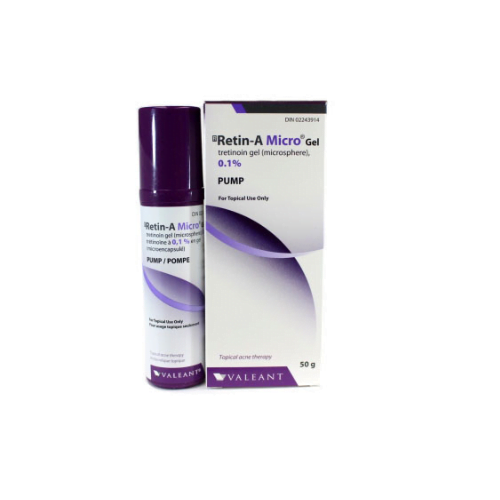
There is a particular kind of object that never really stays an object. It begins on a shelf, in a drawer, beside a sink, but very quickly it becomes a mood, a promise, a ritual, sometimes even a private negotiation. Certain names in skincare carry that energy. They travel through conversations in low voices, appear in bathroom cabinets with a kind of seriousness, and somehow gather more meaning than their size should allow.
What fascinates me is not the product itself so much as the atmosphere around it. A tube, a pump, a gel: these are simple formats, almost modest. Yet the cultural life around them is anything but modest. They become shorthand for effort, restraint, maintenance, reinvention. They belong to that modern category of things people rarely discuss with the grandeur they deserve, even though they often hold surprisingly emotional roles in everyday life.
When a skincare item gains a reputation, it stops living only in packaging. It begins living in expectation. People imagine mornings that feel more composed, reflections that seem less confrontational, routines that suggest momentum. In that sense, the object becomes a companion to hope, but a very disciplined kind of hope. Not fireworks. Not overnight transformation. More like the quiet, repetitive hope of watering a plant and trusting that change can happen without spectacle.
That is perhaps why the language around these products is so interesting. It tends to oscillate between intimacy and distance. On one hand, people speak about them like confidants in a long, patient relationship. On the other, they are described with the coolness of formulas, textures, and systems. The emotional and the technical sit side by side, which feels very contemporary. We like our self-improvement to sound efficient, even when it is deeply personal.
A bathroom shelf can look like a biography
Look closely at someone’s sink and you can often read a chapter of their life. There are the rushed phases, visible in half-used basics. The experimental phases, marked by clutter and curiosity. The minimalist phases, when everything is stripped back to a small cast of trusted names. And then there are the products that seem to signal intent. Not vanity, exactly. More like a decision to engage with one’s reflection in a less accidental way.
That decision is where the real story lives. Skincare is often dismissed as surface-level, but surfaces are where so much of life takes place. Expression is surface. Fatigue is surface. Weather is surface. Time announces itself there too. To care about the visible is not always shallowness; sometimes it is simply a way of participating in one’s own days with more attention.
There is also something unmistakably modern about preferring gradual change. We are used to dramatic language in almost every corner of life, but certain routines resist that tempo. They ask for repetition over revelation. They belong to the quiet economy of habits, where small acts build their own meaning over weeks and months. In a culture that loves instant clarity, that kind of slowness can feel strangely radical.
The strange poetry of maintenance
Maintenance is not glamorous in theory, yet people are often drawn to it in practice. Maybe because maintenance suggests continuity. It says: I plan to be here tomorrow, and the day after that, and I am willing to meet myself there. A skincare ritual can become a small vote in favor of the future, which is more moving than the marketing language usually admits.
That is why products like the one mentioned in this listing often feel larger than their category. They sit at the crossroads of aspiration and routine. They are not simply purchased; they are folded into a pattern of evenings, mirrors, lamp light, and familiar gestures. The significance comes less from the object alone than from the choreography it enters.
Of course, there is tension here too. The desire to improve can easily drift into the pressure to perfect. The mirror can become either a place of recognition or a place of constant audit. Modern beauty culture lives in that contradiction. It offers care and scrutiny in nearly the same breath. The same routine that feels grounding one week can feel loaded the next.
Still, I think that is why these products remain culturally vivid. They are not just about appearance. They are about our relationship to time, patience, and control. They ask a subtle question: what does it mean to participate in change without demanding a performance from it?
Maybe the appeal lies in that balance. A gel in a pump, a pause at the sink, an ordinary gesture repeated often enough to feel meaningful. Nothing cinematic happens, and yet a tiny form of authorship does. A person edits their routine, rearranges a shelf, chooses a texture, returns to the mirror with slightly different eyes.
And perhaps that is the quiet drama after all. Not transformation in the loud sense, but the softer kind: the wish to feel more at home in one’s own reflection, and the curious, everyday rituals built around that wish.
https://borderfreehealth.com/shop/retin-a-micro-gel-0-1-pump/