The Quiet Geography of Everyday Care
Some routines turn the body into a map of memory, choice, and attention—less dramatic than people imagine, and more human.
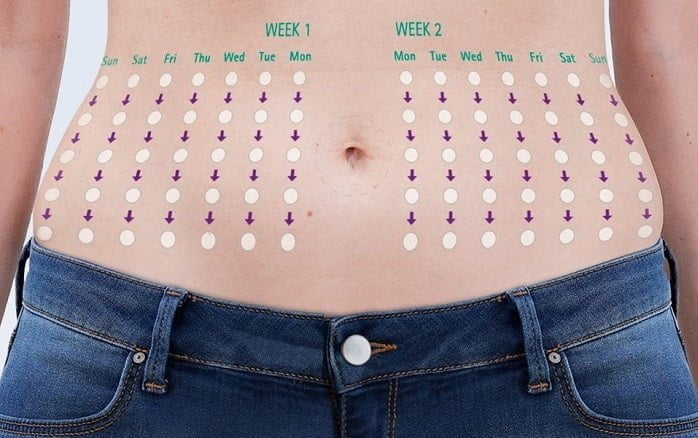
Some forms of care are loud. They announce themselves with alarms, appointments, and obvious disruption. Others are quieter, almost architectural. They ask a person to notice space, repetition, and the small negotiations that happen between habit and body.
That is what makes the conversation around insulin injection sites feel larger than it first appears. On the surface, it can sound technical, almost like a diagram waiting to happen. But look a little longer and it starts to resemble something more intimate: the body understood not only as a biological fact, but as a lived landscape.
We often talk about health in broad terms, as if it arrives in big decisions and dramatic turning points. Real life is rarely so cinematic. More often, it shows up in routines that become so familiar they almost disappear. A movement repeated enough times becomes part of the day’s background music. And yet even the most ordinary routine carries meaning. Where attention lands, how a person creates consistency, what becomes second nature—these are not small things.
A map drawn in repetition
There is something striking about the idea of rotating through different places on the body. Not because it sounds complicated, but because it reveals a quiet kind of intelligence. People develop private systems for getting through public days. They learn the geography of comfort, convenience, clothing, timing, mood. What seems from the outside like a simple practical choice can, from the inside, feel like an entire language.
Bodies are not abstract surfaces. They are remembered places. A shoulder can carry stress before a meeting. A hand can recall an old injury when the weather shifts. A certain side of the body can become associated with ease, another with awkwardness. When routine care enters that map, it doesn’t enter empty space. It joins a long history of sensation, familiarity, and interpretation.
That may be why people speak about these routines with a mix of precision and emotion. The practical and the personal are not separate categories here. They overlap. The body is where logistics become experience.
The myth of effortless routine
There is a cultural tendency to romanticize discipline. Once something becomes a habit, we imagine it must become simple. But routine is not the same as ease. Repetition can bring confidence, yes, but it can also bring boredom, resistance, or the subtle fatigue of always having to remember.
That tension matters. It reminds us that familiar actions are still actions. They still ask something of a person. The calm exterior of routine can hide the ongoing work of paying attention.
In that sense, discussions about safe angles, rotation, and technique point toward something broader than procedure. They suggest a world where care is shaped through tiny corrections and quiet awareness. Not perfection. Not mastery in the dramatic sense. More like a steady conversation with one’s own day.
A useful example of that tone can be found in this overview of injection-site considerations. Even from the title alone, you can feel the blend of practicality and repetition that defines so much of everyday health management.
The body as a place of negotiation
There is also a social layer to all of this. Modern life encourages efficiency, speed, and seamlessness. We admire routines that look frictionless. But many essential forms of self-care are anything but invisible to the person living them. They require planning around meals, schedules, travel, workspaces, family dynamics, and the strange unpredictability of ordinary days.
That is why the language of “best” can feel slightly misleading, even when it is well-intended. In lived experience, “best” is often situational. It depends on the day, the setting, the person’s comfort, their familiarity with the routine, and the thousand unspoken details that never fit neatly into a headline.
This is not a rejection of practical guidance. It is simply a reminder that human beings do not live as diagrams. We live in motion. We adjust. We improvise. We carry preferences that might sound minor to someone else but feel enormous in the moment.
Small choices, larger meaning
What fascinates me most about topics like this is how they reveal the emotional texture of maintenance. Not crisis, not cure, not spectacle—maintenance. The ongoing act of tending to life as it is actually lived.
There is dignity in that kind of attentiveness. There is also creativity. People build rituals that help them feel steady. They create their own shortcuts, reminders, and internal maps. Over time, a routine can become less about interruption and more about orientation—a way of staying in conversation with the body instead of treating it like a machine that should never need checking.
Perhaps that is the quiet lesson hidden inside such a practical subject. Care is rarely only about solving a problem. Sometimes it is about learning how to move through repetition without becoming numb to yourself. Sometimes it is about recognizing that even the most ordinary acts contain thought, adaptation, and a kind of understated wisdom.
In a culture that often celebrates dramatic transformation, there is something grounding about the opposite: a life shaped, gently and persistently, by attention to where and how one continues.
https://canadianinsulin.com/articles/best-insulin-injection-sites/