The Quiet Language of Tiny Measurements
Some objects ask us to notice scale differently, turning routine into a study of precision, trust, and attention.
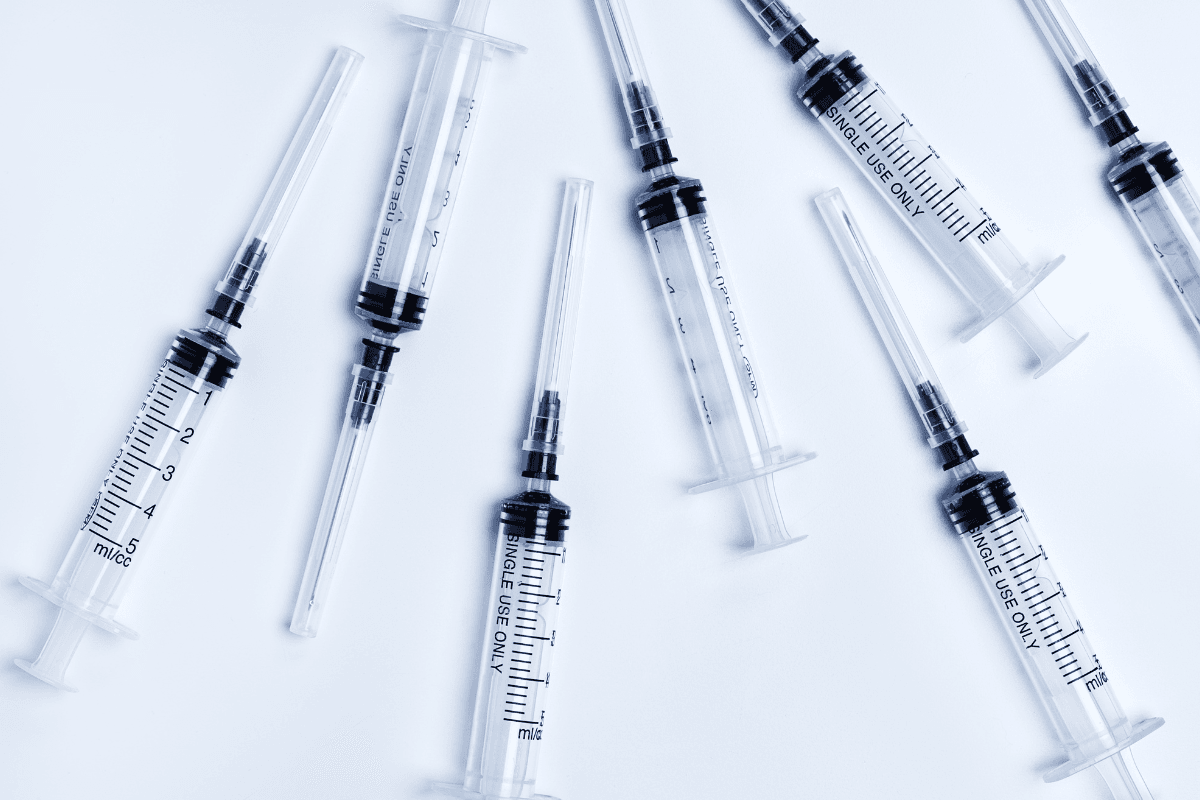
There are some everyday objects that never really enter public imagination until they ask something intimate of the person holding them. A measuring tool tied to insulin is one of those objects. It is small, specific, and easy to overlook from a distance, yet it carries a whole philosophy inside it: the idea that tiny differences can matter, and that routine can become a kind of close reading.
When people talk about health tools in public, the conversation often swings to dramatic themes — breakthroughs, fears, convenience, disruption. But the more interesting story is sometimes quieter. It lives in the design of something made to be read carefully, handled deliberately, and trusted without fanfare. In that sense, the insulin syringe is not only a device. It is also a reminder of how much modern life depends on calibrated attention.
Precision as a daily mood
We tend to imagine measurement as cold and mathematical, but in ordinary life it feels more emotional than that. Measurement can mean reassurance. It can mean hesitation. It can mean pausing for one extra look because “close enough” does not feel like the right language.
That is what makes the topic unexpectedly compelling. The markings on a syringe are not just marks. They represent a relationship between the eye and the hand, between routine and interpretation. Even for people far removed from this experience, there is something recognizable in that ritual. We all have corners of life where scale changes our behavior. A small dial, a faint line, a subtle increment — suddenly attention sharpens.
There is also something culturally revealing here. We live in a world that celebrates speed, yet many of the tools people rely on most ask for the opposite. They ask for patience. They ask for consistency. They ask us to respect the difference between guessing and knowing.
A design you can almost read like a sentence
Good design often disappears into use, but some forms of design remain visible because they must communicate clearly. Measurement tools belong to that category. Their job is not to impress; it is to be legible. They have to speak in a visual language that can be understood in ordinary moments, not ideal ones.
That makes them interesting beyond their function. They show how trust is built. Not through spectacle, but through repeatability. Through markings that are easy to distinguish. Through the feeling that the object is meeting the user halfway.
If you browse this look at insulin syringe measurements, what stands out isn’t just the subject itself. It’s the larger fact that people often need help decoding tools that seem simple from the outside. That gap — between “it’s just a small instrument” and “there is a lot to notice here” — says a lot about how invisible specialized routines can become to everyone else.
The hidden culture of exactness
There is a whole hidden culture around objects built for precision. Not glamorous culture, not trend culture, but practical culture: labels, instructions, line spacing, the silent etiquette of reading something properly before acting. These are the details that shape confidence.
And confidence, in this context, isn’t loud. It is not the confidence of mastery performed in public. It is quieter than that. More domestic. More repetitive. It grows from familiarity with a system of marks and meanings until that system becomes part of one’s rhythm.
That may be why this subject feels bigger than it first appears. It touches on a broader truth: some of the most important forms of knowledge are not abstract at all. They are tactile. Visual. Habitual. They live at the level of noticing.
In a culture obsessed with sweeping solutions, there is something almost radical about honoring small-scale clarity. A line is a line. A unit of measurement is a unit of measurement. The point is not drama; the point is discernment.
More than a tool, less than a symbol
It would be easy to over-romanticize an object like this, and that would miss the point too. An insulin syringe is not a metaphor first. It is a practical item, part of daily life for many people, and practicality deserves respect on its own terms. Yet practical objects still shape the imagination. They teach us what kinds of attention our lives require.
Some teach broad attention — the kind needed for navigating a crowd or scanning a room. Others teach narrow attention — the kind that settles on a line, a marker, a tiny decision. This topic belongs to the second category. It suggests that care is sometimes less about grand gestures than about readability, steadiness, and the discipline of looking closely.
That may be the quiet lesson hidden in discussions about measurement. Not that life can be controlled perfectly, but that there is dignity in trying to understand the scale of what is in front of us. In a noisy world, that kind of exactness feels almost like a form of calm.
https://canadianinsulin.com/articles/insulin-syringes-measurements/