The Quiet Rituals Behind a Smoother Reflection
A reflective look at how modern aesthetic choices have become part of a larger conversation about control, confidence, and change.
There is a particular kind of curiosity that gathers around the mirror. Not vanity exactly, and not insecurity in its simplest form, but something more layered: the wish to recognize oneself while also imagining a slightly different version of what could be seen.
That tension sits quietly behind many modern aesthetic conversations. The language around appearance has changed. People no longer speak only in grand transformations or dramatic makeovers. More often, the interest is in subtlety, in small refinements, in the nearly invisible shift that makes someone feel more aligned with the face they carry through the world.
The age of almost-noticing
Aesthetic culture used to announce itself loudly. It belonged to before-and-after reveals, glossy celebrity speculation, and the idea that change had to be obvious to count. Now, the most discussed changes are often the ones that hover at the edge of perception.
Someone looks rested, but no one can quite say why. A familiar expression seems softer. A face appears a little less marked by stress, weather, or repetition. The language of beauty has become quieter, and perhaps more complicated because of it.
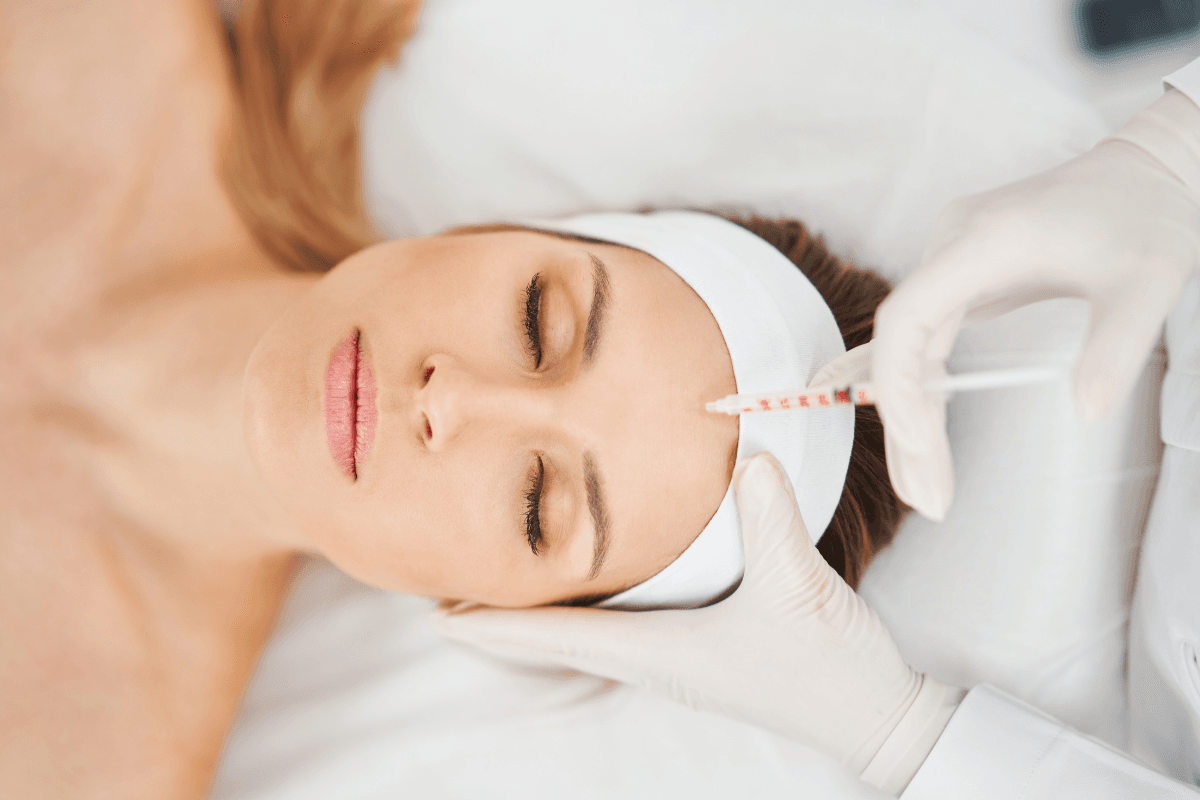
This is where interest in injectable treatments, including newer liquid formulations discussed in professional settings, enters the cultural frame. Not as a simple trend, and not as a universal answer, but as part of a wider fascination with precision. The modern face is increasingly treated as something that can be edited gently, like a photograph adjusted not with a filter but with a careful hand on the contrast dial.
A brief overview from Med Wholesale Supplies places this kind of product conversation within the professional aesthetic landscape, where terminology, format, and expectation all carry weight.
Why format becomes part of the story
What is interesting, from a cultural point of view, is not only that people are curious about aesthetic products. It is that the form of those products becomes meaningful.
A liquid version of something, for example, sounds contemporary even before anyone discusses its use. Liquid suggests readiness, smoothness, immediacy. It feels at home in a world that likes streamlined processes and minimalist packaging. We are drawn to things that seem less cumbersome, less ceremonial, less burdened by preparation.
This does not mean the product itself should be treated casually. Quite the opposite. The more effortless something appears from the outside, the more invisible structure tends to sit behind it. In aesthetic spaces, calm surfaces often depend on careful systems, trained judgment, and an understanding that small choices can carry emotional significance.
That emotional significance is easy to overlook. People do not usually become curious about appearance in isolation. They become curious in seasons of transition: returning to work, entering a new decade, recovering from stress, becoming more visible, becoming less visible, or simply noticing that their reflection no longer matches their internal sense of energy.
The face as a timeline
Every face is a record of repetition. Smiling, concentrating, squinting into sun, holding back tears, laughing too hard, sleeping badly, worrying silently. The marks that appear over time are not failures. They are evidence.
And yet, people have always negotiated with evidence. We cut our hair after endings. We buy new clothes before beginnings. We change our homes when our lives feel stuck. To alter appearance, even slightly, is often to participate in the old human habit of marking change on the body.
The contemporary difference is that these choices are increasingly precise. Instead of transformation as spectacle, the desire is often for calibration. Less “make me different” and more “let me feel like myself on a clearer day.”
That phrase, or something close to it, seems to define much of the modern aesthetic mood. It is not necessarily about youth in the most literal sense. It may be about softness, control, privacy, or the wish to reduce the visible noise of fatigue. The face becomes less a mask and more a negotiation between biography and preference.
The private nature of visible choices
There is also a strange paradox in aesthetic decision-making: the results are public, but the reasoning is private.
A person’s face is seen by coworkers, strangers, friends, family, cameras, and passing reflections in shop windows. But the motives behind any change may belong only to them. Outsiders may guess, judge, compliment, or never notice. None of those responses fully explains the choice.
This is perhaps why conversations around injectables can become so charged. They sit at the crossroads of autonomy and social pressure. One person may experience aesthetic care as confidence. Another may see it as conformity. Often, both readings can exist in the same room.
The more generous approach is to admit that appearance choices rarely have one meaning. They can be playful and serious, personal and cultural, liberating and complicated. A single decision may contain curiosity, caution, excitement, uncertainty, and a wish not to have to explain any of it.
A quieter kind of modernity
The fascination with refined aesthetic treatments says something about the era. We live in a time that prizes both authenticity and optimization, two values that do not always sit comfortably together. We are told to be ourselves, but also to improve ourselves. To age naturally, but not look tired. To care less about appearance, while existing in an image-saturated world.
Within that contradiction, small aesthetic choices become part of a broader negotiation. They are not merely about surfaces. They are about how people manage visibility, self-perception, and the gap between how they feel and how they think they are seen.
Perhaps that is why the most interesting question is not whether modern aesthetic tools are good or bad in some sweeping cultural sense. The richer question is why subtle change has become so compelling.
Maybe it is because subtlety offers a kind of plausible privacy. Maybe it lets people experiment without announcing a reinvention. Maybe it reflects a world where everyone is both more visible and more protective of their inner life.
The mirror remains an ordinary object, but the conversations around it keep evolving. In its glass, people do not only look for beauty. They look for continuity, reassurance, possibility, and sometimes a little evidence that change can be chosen rather than merely endured.