The Quiet Rituals We Build Around Certainty
A reflective look at how small routines can become anchors in a world that often asks people to manage complexity quietly.
There are objects in daily life that carry more meaning than their size suggests. They sit in drawers, on shelves, inside small bags, or behind cabinet doors, quietly folded into the rhythm of a day. To an outsider, they may look ordinary. To the person who has made room for them, they can represent planning, continuity, memory, and a kind of private steadiness.
That is what makes certain health-related routines so culturally interesting. Not because they should be treated as symbols first, but because they reveal something about how people live with repetition. A vial, a label, a small box, a familiar package — these things can become part of the background architecture of a household. They are not the whole story, but they often mark the presence of a story being carefully maintained.
The emotional weight of the ordinary
Modern life tends to celebrate big transformations. We notice dramatic before-and-after moments, decisive announcements, visible milestones. But many lives are shaped more by the quiet consistency of repeated gestures. The checking, the remembering, the setting aside of time. The way someone learns to organize a shelf or carry a bag differently. The way a routine becomes less of an event and more of a pulse.
There is a particular kind of intimacy in these ordinary systems. They are rarely glamorous. They may not be discussed widely, and when they are, the language can become technical very quickly. Yet underneath the technical vocabulary is something profoundly human: the desire to move through a day with enough order to feel possible.
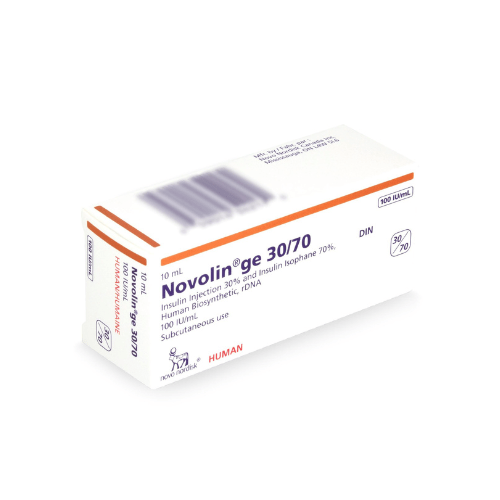
A product page such as the one for Novolin ge 30/70 Vial sits within that larger landscape, where practical details and private routines meet. The page may be functional in nature, but the broader subject points toward the daily negotiations people make with time, attention, and care.
When routine becomes atmosphere
The most interesting routines are often the ones that disappear into the room. At first, a new habit may feel loud. It asks for space. It interrupts. It requires reminders, adjustment, perhaps even a little emotional bargaining. Over time, though, the same habit can become atmospheric. It stops announcing itself and starts belonging.
This is true of many recurring practices. Morning coffee. Evening walks. Preparing a lunchbox. Laying out clothes before bed. Returning keys to the same bowl by the door. None of these acts are remarkable on their own, but each reduces a tiny amount of friction. Each says, in its own modest way: here is one less thing to decide from scratch.
Health routines can carry that same texture, though often with a heavier undertone. They can ask for attentiveness without fanfare. They can require someone to become fluent in the small choreography of their own life. Not in a heroic, cinematic way, but in the quieter way people become experts in their days.
The private design of being prepared
Preparedness is often imagined as a dramatic quality, something associated with emergency kits or grand plans. In reality, it is usually much smaller. It is remembering where something is kept. It is noticing when supplies are running low. It is understanding which corner of a bag works best. It is having a mental map of the objects that support a routine.
There is a design sensibility hidden in this. People customize their lives constantly, not always with aesthetic intention, but with practical intelligence. A drawer becomes a station. A container becomes a system. A calendar note becomes a safeguard against forgetting. These adaptations can be so personal that they are almost invisible to anyone else.
And yet, this invisible design says a great deal about resilience. Not the loud version of resilience that gets printed on posters, but the more durable version: the ability to keep making life workable. To revise. To arrange. To notice what helps and what gets in the way.
A culture of quiet management
We live in a culture that often turns care into either a public performance or a private burden. There is less room for the middle ground, where most people actually live. In that middle ground, care is repetitive, imperfect, sometimes boring, sometimes reassuring. It may involve conversations, appointments, products, paperwork, storage, habits, and an ongoing relationship with uncertainty.
The language around such routines can become overly polished or overly clinical, leaving out the texture of lived experience. But people do not inhabit categories; they inhabit mornings, kitchens, commutes, errands, and evenings when they are tired. They inhabit the small decisions that accumulate around whatever needs attention.
This is why the ordinary objects of care deserve a gentler kind of noticing. Not romanticizing, not dramatizing, and certainly not pretending they mean the same thing to everyone. Just noticing. Seeing how much of life happens in the background, supported by systems that rarely receive attention unless something disrupts them.
The comfort of known patterns
There is comfort in familiarity, even when the thing being managed is complex. A known pattern can make a day feel less scattered. It can become a kind of handrail. Not a solution to every uncertainty, but a way of moving through uncertainty with slightly more steadiness.
That may be why people often develop loyalty to certain routines beyond pure convenience. Familiarity lowers the emotional volume. It allows the mind to stop asking, “What now?” quite so often. The shape of the day becomes a little more legible.
Of course, no routine is entirely effortless. Life changes. Schedules shift. Travel happens. Stress rearranges priorities. What worked beautifully in one season may feel clumsy in another. But even then, the instinct to build a pattern remains. Humans are pattern-making creatures. We look for rhythms because rhythms help us belong to our own lives.
What small rituals reveal
The smallest rituals can reveal the largest truths: that independence is often supported by structure, that care can be both practical and emotional, and that ordinary objects can hold extraordinary significance without ever asking to be seen that way.
A vial on a shelf is not a metaphor to the person who uses it. It is part of a real, specific, personal routine. Still, from a distance, it can remind the rest of us how much meaning lives inside everyday maintenance. The things we repeat are not always evidence of monotony. Sometimes they are evidence of attention.
And attention, quietly practiced over time, may be one of the most human forms of care we have.
https://canadianinsulin.com/product/novolin-ge-30-70-vials-100-units-ml/