The Quiet Rituals We Build Around Sensitive Skin
A reflective look at why calming skincare has become less about perfection and more about the small negotiations of daily life.
There is a particular kind of awareness that arrives with sensitive skin. It is not dramatic, not always visible to anyone else, and rarely convenient. It lives in the quick glance at a mirror under harsh lighting, the pause before trying something new, the memory of a product that seemed harmless until it was not. Over time, that awareness can become a private language: texture, temperature, timing, mood.
Skincare, in that context, stops being just a shelf of bottles. It becomes a way of listening.
The world around beauty has long preferred certainty. Clear labels, bold promises, before-and-after thinking. But the experience of sensitivity often resists that tidy confidence. It asks for a softer vocabulary. Instead of transformation, there is adjustment. Instead of a total reset, there is the hope of a calmer morning, a less reactive evening, a face that feels less like it is reporting every change in weather, stress, or routine.
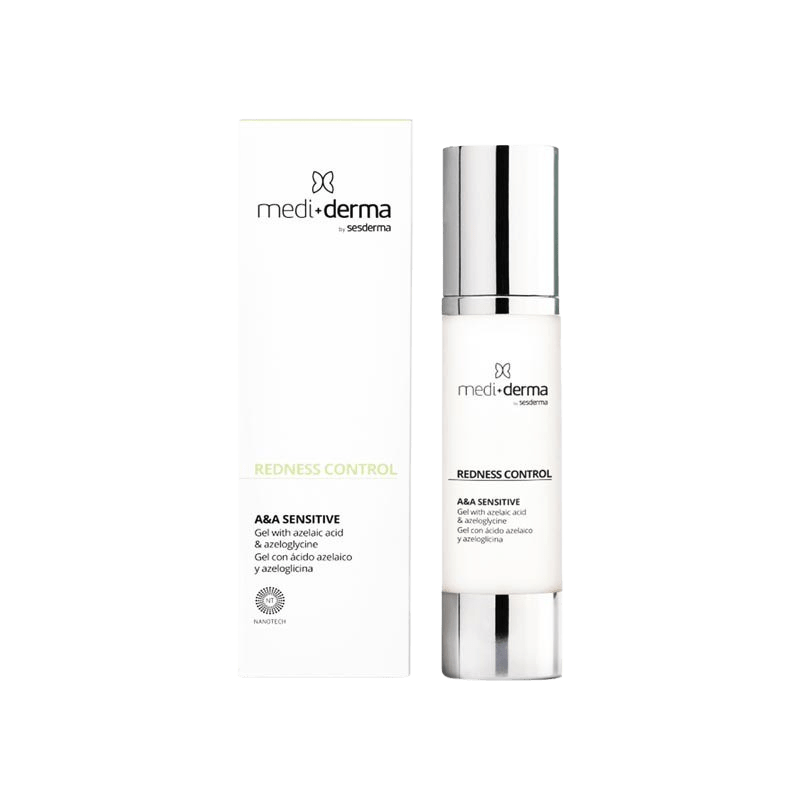
A product name like Redness Control A&A Sensitive Gel sits inside that larger cultural shift: the move away from beauty as performance and toward care as negotiation.
The new patience of skincare
There was a time when the most exciting skincare conversations revolved around intensity. Stronger, faster, brighter, newer. The language had an almost athletic quality, as if the face were a project to be trained into compliance. Even now, that mood has not disappeared. It still shows up in the gleam of launches, the hunger for visible results, the thrill of discovering a product with a reputation.
But alongside that energy, another sensibility has emerged. Quieter. More observant. Less interested in winning a race against the mirror.
Sensitive skin tends to teach patience, sometimes reluctantly. It can make a person suspicious of trends and attentive to small details. The fragrance that feels pleasant to one person may feel overwhelming to another. A rich texture may comfort in winter and feel too present in summer. A routine that seemed perfect during a calm week may feel different after travel, stress, or a night of poor sleep.
This is not failure. It is simply the body refusing to behave like a static object.
Redness as a social signal
Redness is a curious thing because it sits at the border between the physical and the emotional. A flush can suggest warmth, embarrassment, irritation, exertion, weather, excitement, or nothing that can be neatly named. It can be fleeting or persistent, subtle or impossible to ignore. It can feel intensely personal while also being publicly visible.
That visibility changes the way people talk about it. Unlike concerns that remain hidden under clothing or known only by sensation, facial redness can enter a room before a person has explained anything. It may invite unsolicited comments, sympathetic looks, or the exhausting assumption that something must be wrong.
Perhaps that is why products associated with calming or sensitive-skin routines carry a particular emotional weight. They are not only about appearance. They are often tied to the desire to feel less watched by one's own reflection, less interrupted by the face as a public surface.
There is a quiet dignity in wanting that. Not perfection. Not erasure. Just a little more ease.
The bathroom shelf as biography
Most people’s skincare shelves are not as curated as they appear in photographs. They are archives. A half-used cleanser from a hopeful phase. A tiny sample saved for travel and never opened. A moisturizer bought after a friend’s recommendation. A gel kept within reach because its texture feels right at a certain hour of the day.
These objects mark experiments, disappointments, loyalties, and changes in self-perception. They reveal how we learn from our own habits. Some people want a routine that feels invisible. Others like the ceremony of it: washing the day away, applying something cool, waiting a moment before stepping back into the world.
For sensitive skin, the ritual may become especially intimate. There is often less room for impulse and more space for recognition. The best moments are not always dramatic. Sometimes they are almost boring, and that is the pleasure: no surprise, no sudden discomfort, no need to rethink everything.
Boring, in skincare, can be beautiful.
The appeal of gentleness
Gentleness has become a strangely modern aspiration. In a culture that rewards optimization, productivity, and visible improvement, gentleness can feel almost rebellious. It suggests that not every problem needs force. Not every concern requires escalation. Not every mirror moment has to become a campaign.
This does not mean abandoning curiosity. People still explore, compare textures, read labels, ask friends, and refine their routines. But the tone is changing. The question is less often, “What will make me look different?” and more often, “What feels compatible with my life?”
Compatibility is an underrated word. It holds room for preference, environment, budget, schedule, and temperament. It recognizes that skincare is not experienced in a laboratory of perfect consistency. It happens in small apartments, shared bathrooms, hotel sinks, early commutes, late nights, humid afternoons, and winter mornings when the air feels thin and sharp.
A sensitive-skin routine lives in all of those places.
Care without spectacle
The most meaningful rituals are often the least theatrical. A glass of water beside the bed. A familiar sweater on a difficult day. A few quiet minutes at the sink before sleep. These habits do not announce themselves as life-changing, yet they gather importance through repetition.
Skincare belongs to that category when it is approached without panic. It can be a daily check-in rather than a verdict. A way to notice what has shifted. A small act of steadiness in a culture that constantly invites comparison.
For anyone navigating sensitivity, redness, or reactivity, the beauty conversation can sometimes feel too loud. Too certain. Too eager to solve. But there is another conversation happening beneath it, one built on observation and restraint. It leaves room for ambiguity. It admits that the face is not separate from the rest of a life.
And maybe that is the most interesting part of modern skincare: not the promise of becoming someone else, but the quieter possibility of becoming more fluent in oneself.
https://medwholesalesupplies.com/product/redness-control-aa-sensitive-gel-mediderma-50-ml/