The Quiet Tension Between Freshness and Change
A reflective look at why modern beauty conversations keep circling subtle renewal, restraint, and the wish to look like oneself.
There is a particular kind of beauty conversation happening now, and it is quieter than the ones that came before it.
Not long ago, transformation was often imagined as a dramatic reveal: the new haircut, the obvious makeover, the before-and-after moment arranged like theatre. Today, the mood feels different. People still talk about looking refreshed, rested, or more aligned with how they feel inside, but the language has softened. The fantasy is less about becoming someone else and more about returning to a version of oneself that feels familiar.
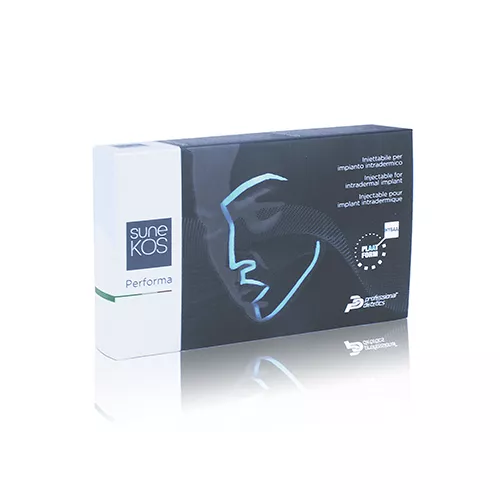
That is the cultural space surrounding names like Sunekos Performa: not as a promise to examine clinically, but as a signpost in a larger shift. The interest around such products says something about how beauty has moved from spectacle toward subtlety, from reinvention toward maintenance, from being noticed to not being able to explain why someone looks well.
The rise of the barely visible change
There is a strange elegance in changes that do not announce themselves. A room looks better after someone has rearranged the light, not the furniture. A face seems different after a holiday, a good week of sleep, or a season of less stress. The appeal lies in ambiguity.
This ambiguity has become its own kind of aesthetic. People do not always want a result that can be named across a dinner table. They often want something closer to atmosphere: a softened impression, a refreshed presence, a sense that the mirror has become slightly kinder without telling a whole story.
The modern beauty mood is full of these half-visible desires. We collect words like glow, bounce, radiance, and vitality, even when we cannot define them precisely. They are emotional words as much as visual ones. They suggest not only how a person looks, but how they might be feeling.
Looking well as a cultural language
To look well has become a kind of social dialect. It is not exactly glamour, and it is not exactly health. It sits somewhere between care, luck, routine, and presentation. In many circles, looking well implies balance: enough rest, enough discipline, enough resources, enough ease.
Of course, that idea can be unfair. Faces carry work, grief, weather, genetics, habits, joy, and time. No single surface tells a whole life. Still, the cultural pull remains. People read faces constantly, even when they pretend not to. We notice brightness, tension, softness, fatigue. We build stories from tiny visual cues.
This is partly why understated beauty has become so compelling. It does not ask to be admired as a performance. It asks to be interpreted as natural, effortless, perhaps even accidental. The less obvious it is, the more successfully it seems to fit the current mood.
The new restraint
Restraint is having a moment. In interiors, it appears as warm minimalism. In fashion, as expensive-looking basics. In food, as simple ingredients prepared carefully. In beauty, it appears as the wish to look untouched while very much caring.
There is a paradox here. The most natural-looking choices can require the most thought. The appearance of ease is often curated. A quiet face, a quiet outfit, a quiet room: none of them are necessarily unplanned. They may simply reject the noise of obvious effort.
This does not make the desire false. It makes it human. Most people are full of contradictions. They want to accept time and also soften its edges. They want authenticity and also control. They want to be seen, but not scrutinized. They want care to show, but not the labor behind it.
Beauty culture thrives in these contradictions because it has always been about more than appearance. It is about identity, timing, confidence, memory, and the delicate negotiation between private self-image and public perception.
A mirror with softer questions
The most interesting part of today’s renewal culture may not be the products or treatments themselves, but the questions people bring to them. Not only “What can change?” but “How much change still feels like me?” Not only “What is visible?” but “What do I want others to notice, and what do I want to keep private?”
These questions are intimate. They do not always have fixed answers. A person may feel differently at thirty than at forty, differently after illness, after becoming a parent, after ending a relationship, after entering a new chapter. The mirror is never neutral; it is colored by mood, memory, and expectation.
That is why subtle beauty conversations tend to linger. They are not simply about surfaces. They are about the emotional comfort of recognition. There is a deep appeal in looking in the mirror and feeling that the outside has not drifted too far from the inner picture.
The appeal of almost nothing happening
Perhaps the most modern beauty ideal is not perfection but plausible freshness. Not a face erased of time, but one that seems to have had a little more sleep, a little more light, a little less pressure. The dream is not always youth. Sometimes it is continuity.
And continuity is a softer, more forgiving idea. It allows for change while holding onto identity. It accepts that people evolve, but still want to recognize themselves along the way.
In that sense, the quiet tension between freshness and change is not a problem to solve. It is the emotional center of the conversation. We want evidence of care without a declaration. We want renewal without rupture. We want the world to see us clearly, but perhaps a little gently too.