The Small Objects That Change a Household Rhythm
A reflective look at how compact health tools can quietly reshape routines, attention, and the emotional architecture of daily life.
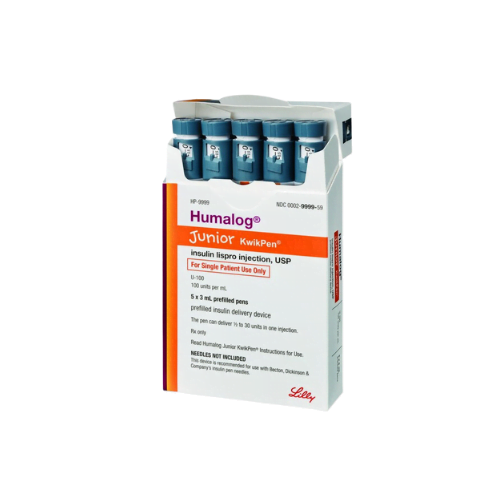
There are objects in a home that do not announce themselves. They sit in drawers, travel pouches, bathroom cabinets, the side pocket of a backpack. They are small enough to misplace but important enough to make everyone more aware of where they are. Their presence can alter the choreography of a morning without ever becoming the center of the story.
A compact pen-shaped health tool belongs to this quiet category. It is not furniture, not decoration, not something people display. Yet it can become part of the invisible map of a day: the moment before leaving the house, the pause after opening the refrigerator, the check-in before a school run, a commute, a meal, a sleepover, a weekend trip. The object itself may be simple in appearance, but the atmosphere around it is rarely simple.
What stands out is not only the tool, but the way people build routines around small certainties. A household may learn to keep track of it without making a ceremony of it. Someone remembers the pouch. Someone else asks whether it is packed. A parent develops a particular kind of peripheral vision, the kind that notices whether a zippered case is on the counter while also finding shoes, answering a message, and listening for the kettle.
The emotional weight of practical things
Modern life is full of objects designed to make care more portable. We carry chargers, water bottles, spare keys, lip balm, headphones, cards, and medications. Some are replaceable conveniences. Others hold a different charge. They are connected to responsibility, timing, vulnerability, and trust.
That difference is hard to describe from the outside. A slim device may look ordinary, but for the person who depends on it, or the person helping manage it, it can become emotionally enlarged. It may represent readiness. It may represent independence. It may also represent the feeling that life requires a layer of attention other people do not always see.
This is where the cultural meaning becomes interesting. We often talk about health tools as if they belong only to the world of function. Does it fit? Is it portable? Is it easy to identify? But in real households, function blends with memory and mood. A familiar item can become part of a family’s shared language. It can be the thing someone checks for without being asked, the thing that makes travel feel possible, the thing that turns a potentially anxious departure into a calmer one.
A small lesson in independence
Objects used by younger people carry another layer: the slow transfer of responsibility. There is a stage in many families when adults manage everything. Then, gradually, the young person notices more, asks more, remembers more. The object becomes part of learning how to move through the world with awareness.
This shift is not always dramatic. It may happen in tiny scenes. A child reminds an adult to pack a case. A teenager develops a system that no one else understands but somehow always works. A caregiver stops asking every question and starts trusting a practiced routine. These are not public milestones, but they matter. They are the private architecture of growing up.
The word “junior,” when attached to any everyday tool, can suggest a bridge between dependence and autonomy. It points toward smaller hands, smaller bags, smaller margins of patience, but also toward capability. It invites the question of how design meets real life: the hurried hallway, the cluttered kitchen, the overnight bag, the classroom desk, the car seat, the airport security tray.
None of these places are idealized. They are where routines are tested. They are also where confidence is built.
The quiet design of reassurance
There is a particular comfort in objects that are easy to recognize. In a world where so much care is abstract, a physical item gives attention a shape. It can be held, packed, checked, named. That does not remove uncertainty, but it can make uncertainty feel less shapeless.
Perhaps this is why small health-related tools often become part of domestic folklore. Every family has its own rituals around what must not be forgotten. Some people keep lists. Some use designated bags. Some rely on the person who always remembers. Some create backup plans. Over time, the routine becomes less like a rule and more like a rhythm.
A listing such as the one at Border Free Health is a reminder of how many ordinary objects exist at the intersection of healthcare, logistics, and daily life. Behind each product name is a set of human scenes: someone organizing a shelf, comparing what is needed for the week, preparing for a trip, or trying to make an unpredictable day feel more manageable.
More than the object
The most interesting part of these tools may be the way they disappear into life. At first, something new can feel prominent. It asks to be understood, stored, remembered. Later, it becomes part of the background. Not unimportant, but integrated. Like glasses on a bedside table or a key by the door, it becomes one of the things that supports movement through the day.
That integration is a kind of quiet success. It means the object no longer interrupts the story as often. It has found its place among lunchboxes, calendars, laundry, homework, grocery bags, and weekend plans. It becomes ordinary, and ordinariness can be a gift.
Still, its ordinariness is never empty. It carries the care of people who remember, the patience of people who teach, and the resilience of people who keep going even when their routines require extra thought. Small objects can reveal large truths about how families adapt. They show how responsibility becomes habit, how habit becomes confidence, and how confidence can sometimes fit in the palm of a hand.
https://borderfreehealth.com/shop/insulin-humalog-junior-kwikpen-100u-ml-3ml/