The Small Objects That Gather Big Expectations
A reflective look at how ordinary health-related objects can carry routines, hopes, and private meaning in everyday life.
There are objects in a home that seem quiet until you notice how much attention gathers around them. A kettle on the counter. A pill organizer tucked into a drawer. A small box in the refrigerator. A pen-shaped device resting where it can be remembered but not stared at too long.
Some things are designed to be practical, but they do not stay purely practical in the lives of the people who use them. They become part of a morning rhythm, a reminder of planning, a little marker of responsibility. They sit at the edge of ordinary life and something more complicated: the wish to keep going steadily.
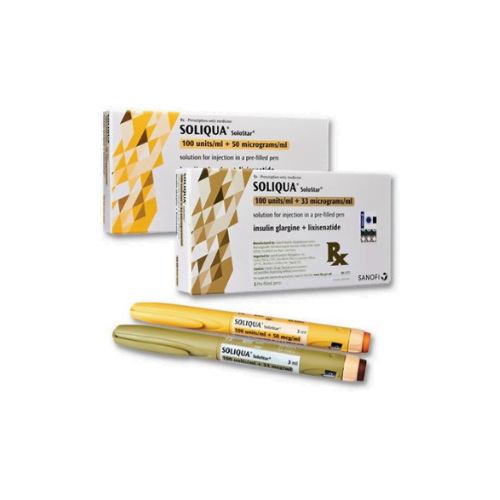
That is what makes certain health-related objects culturally interesting. Not because of their technical details, which belong in conversations with professionals, but because of the space they occupy in daily life. A product listing such as Soliqua Solostar Pens points toward more than an item on a page. It hints at a whole landscape of habit, privacy, adaptation, and expectation.
The object as a routine
Modern life is full of tools that promise to make routines more manageable. We like objects that fit into bags, drawers, calendars, and the narrow windows between work, errands, meals, and sleep. The more personal the routine, the more invisible the tool often becomes.
There is something revealing about this invisibility. Many people carry responsibilities that are rarely visible to others. A day may look simple from the outside: commuting, replying to messages, buying groceries, meeting friends. Beneath that surface, there may be quiet calculations, reminders, precautions, and private checkpoints.
The object itself may be small, but the mental space around it can be large. It can represent consistency. It can represent interruption. It can represent the strange modern skill of making room for care without letting care become the entire story.
Design and the feeling of control
We often talk about design as if it is mostly about appearance. Sleek shapes, clean labels, compact packaging. But design also affects emotion. An object can feel intimidating or approachable. It can seem clinical or ordinary. It can make a task feel like a disruption, or like something folded into the day with less friction.
This is not about claiming that design solves the deeper complexities of health. It does not. But objects do influence how people relate to routines. A thing that is easier to recognize, store, hold, or remember may carry a different emotional weight than one that feels alien or cumbersome.
In that sense, the pen-like form has become a broader symbol of contemporary self-management. It belongs to a world where care is increasingly portable, scheduled, and integrated into private spaces. The home becomes a quiet extension of systems that used to feel more distant. The kitchen counter, bedside table, and travel pouch become places where larger stories are managed in miniature.
The private life of preparedness
Preparedness has a distinct atmosphere. It can be calming, but it can also be tiring. It asks people to think ahead, to notice supplies, to protect routines from chaos. It is the opposite of spontaneity, yet it exists so that life can feel a little more open.
There is a subtle contradiction there. Planning is often what allows freedom. A person who prepares may do so not because they enjoy structure for its own sake, but because structure creates room for other things: dinner with family, a weekend away, a long meeting, a lazy afternoon, a walk without constantly thinking about logistics.
Health-related objects can therefore become tokens of readiness. They are not glamorous. They are not usually discussed at dinner parties. But they may quietly support the possibility of moving through the day with fewer surprises.
What we do not see
One of the gentler lessons of noticing objects like these is humility. It becomes harder to assume that we know what someone else’s life requires. People are always managing unseen details. Some are emotional, some financial, some physical, some administrative. Many are all of these at once.
The culture of wellness often prefers visible rituals: the smoothie, the running shoes, the meditation app, the tidy shelf of supplements. But much of real care is less photogenic. It is repetitive, practical, sometimes boring, sometimes inconvenient. It does not always announce itself as inspiring. Often, it simply has to be done.
That does not make it less meaningful. If anything, the quietness may be the point. A private routine can be an act of steadiness. A small object can become part of a larger negotiation with uncertainty.
A quieter way to look
It is tempting to reduce health-related products to categories, specifications, and labels. Those details matter in the right settings, but they are not the whole human picture. Behind every object is a person trying to make daily life workable.
Maybe that is why these small things deserve a more spacious kind of attention. Not dramatic attention. Not anxious attention. Just enough to recognize that the ordinary tools around us often carry extraordinary amounts of meaning.
A pen on a shelf may be only a pen-shaped device. A box may be only a box. But in the rhythm of a life, such objects can become reminders of resilience, privacy, routine, and the ongoing attempt to meet the day with care.
https://borderfreehealth.com/shop/soliqua-solostar-pens-100u-33mcg-ml-5x3ml/