The Small Paper That Explains an Absence
A reflective look at why a simple note still carries so much weight in modern routines of work, school, care, and trust.
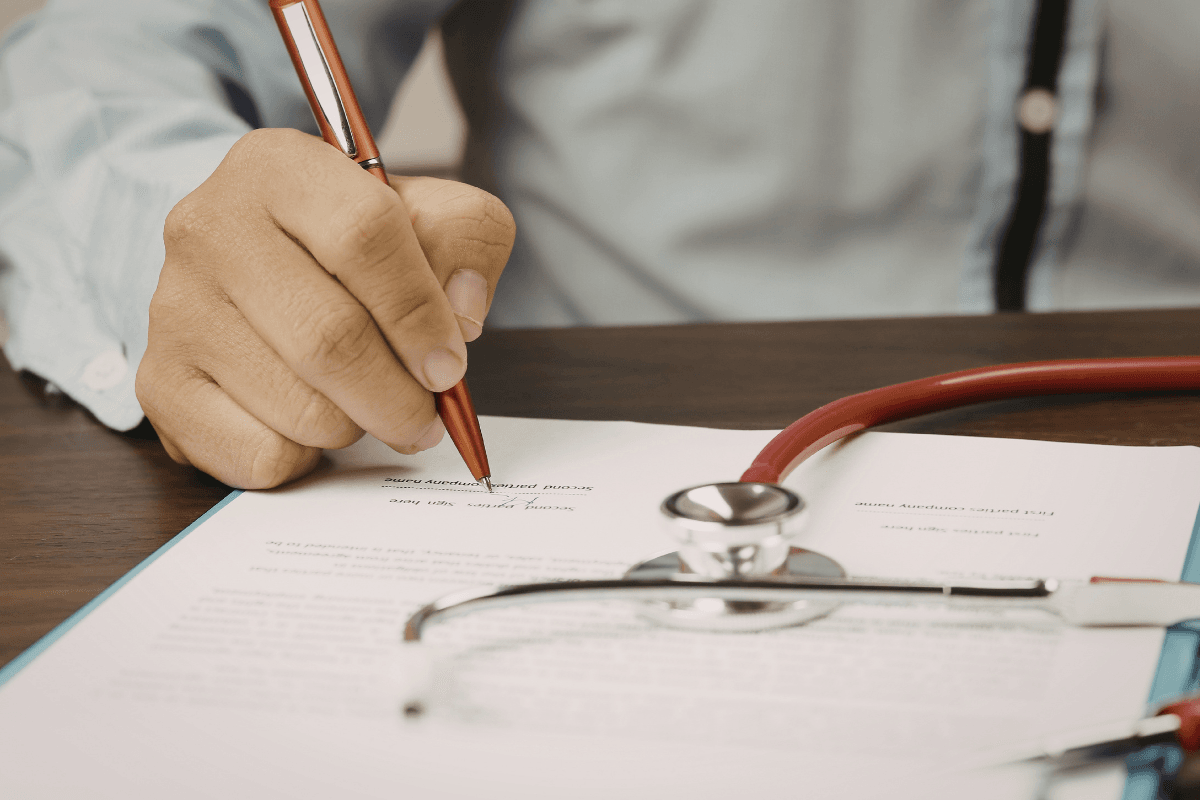
Some documents are larger than they look. A doctor’s note, for instance, is rarely just a slip of paper or a downloaded file. It sits at the strange intersection of health, obligation, privacy, and proof. It may be brief, almost plain, but it often carries the emotional weight of needing to be believed.
In the everyday choreography of work and school, absence can feel oddly visible. A missing seat, an unanswered message, a shift left uncovered, a deadline stretched by a day. People get sick, people recover, people care for others, people reach the edge of what they can reasonably do. Yet modern systems tend to ask for a shape around that absence. A reason. A record. A small official bridge between private life and public expectation.
That is where the humble note enters the story.
The ritual of being accounted for
There is something quietly revealing about how much culture depends on documentation. We live in a time when many things are informal: meetings happen on screens, assignments arrive through portals, managers send quick messages instead of formal memos. Still, when it comes to illness or recovery, the old need for verification has not disappeared. It has simply changed formats.
A note can arrive as a printed page, a portal message, a digital form, or a file forwarded from one inbox to another. Its appearance may shift, but its role remains familiar. It tells an institution that a person’s absence belongs to the category of life that should be met with some degree of patience.
That may sound simple, but it is not emotionally neutral. For many people, requesting documentation can feel like stepping into a small performance of legitimacy. One is not only unwell or overwhelmed; one must also translate that experience into acceptable administrative language.
A resource such as this overview of doctor’s notes for work, school, and telehealth points toward how familiar that moment has become in everyday life.
Work, school, and the shared calendar
Workplaces and schools are different worlds, but they share one stubborn fact: they run on schedules. Bells, shifts, meetings, exams, attendance systems, calendars. The schedule is a social agreement, and absence disrupts it. Not always dramatically, but enough to require explanation.
For students, a note can sit between illness and a missed test, between recovery and attendance rules, between a family’s private morning and an institution’s recordkeeping. For workers, it can stand between a sick day and a policy, between an unpredictable body and a predictable rota.
The note itself does not tell the whole story. It cannot capture the dull fatigue of dragging through a week, the anxiety of falling behind, or the awkwardness of telling someone in authority that the body has interrupted the plan. It simply marks that something happened outside the normal rhythm.
And perhaps that is why these documents feel so oddly important. They are small acknowledgments that people are not machines, even when the systems around them sometimes move as if they were.
Telehealth and the new doorway
The rise of telehealth has changed the texture of the experience. The waiting room may now be a kitchen table. The clipboard may be an online form. The conversation may happen through a screen, with a lamp reflected in the background and a half-finished cup of tea nearby.
This shift can make healthcare feel closer, but it also makes the boundary between personal life and official documentation feel more fluid. The note is no longer necessarily something carried from one physical office to another. It may travel faster than the person receiving it. It may appear in a portal before the day has fully resumed.
There is a curious intimacy in that. A private conversation becomes a formal record, then a workplace attachment or school upload. The path from feeling unwell to being administratively understood has become shorter in some ways, but not necessarily less complicated.
Proof in an age of trust issues
The doctor’s note also reveals a broader tension: trust is valued, but verification is often requested. Institutions may want to be compassionate, yet they also build rules to manage fairness, staffing, attendance, and accountability. Individuals may want privacy, yet they may be asked to provide enough information to satisfy a policy.
This is not only a medical matter. It is a social one. It reflects how communities decide whose words are enough, when documentation becomes necessary, and how much of a personal situation must be made legible to others.
A note does not solve that tension. It merely gives it a format.
The quiet significance of a simple record
Maybe the reason doctor’s notes remain culturally interesting is that they are both ordinary and symbolic. They belong to the paperwork of daily life, yet they touch on vulnerability. They are practical, but they also say something about how people move through systems that require evidence of disruption.
Behind every note is a small pause in the expected order of things. Someone was absent. Someone needed time. Someone had to explain the gap between what was planned and what was possible.
In that sense, the document is not just about permission. It is about translation. It turns a private interruption into a public sentence that institutions know how to read. And in a world that often asks people to keep moving, even when life briefly refuses to cooperate, that small act of translation can feel more meaningful than the paper itself.
https://medispress.com/health-hub/doctors-note-guide-for-work-school-and-telehealth/