The Small Rituals That Make Numbers Feel Personal
A reflective look at the quiet role of everyday devices in turning private routines into moments of attention, interpretation, and calm.
There is a particular kind of object that lives quietly at the edge of daily life. It is not decorative, exactly, and not something people usually discuss with poetic enthusiasm. It may sit in a drawer, a travel pouch, a bathroom cabinet, or beside a notebook filled with dates and small observations. Its purpose is practical, but the space it occupies can become surprisingly emotional.
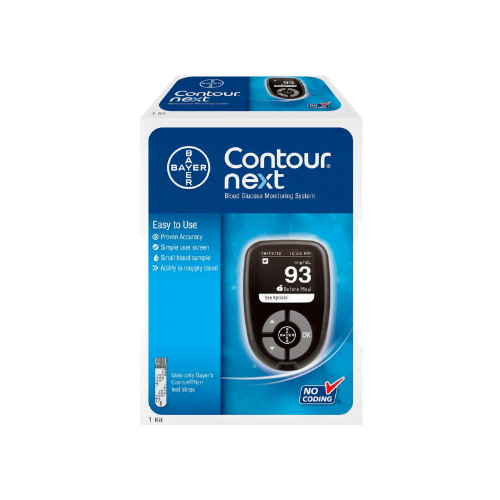
A compact meter, for instance, belongs to this category of intimate tools. It is small enough to disappear into a bag, yet meaningful enough to shape a moment. The name on the box matters less, in a cultural sense, than the ritual around it: the pause, the attention, the reading, the private interpretation that follows. Products such as the one listed by CanadianInsulin.com at this product page point toward a broader modern reality, where personal health routines increasingly happen in the palm of the hand.
The private theater of measurement
Numbers have a strange power. They can seem neutral, almost flat, but people rarely experience them that way. A number can reassure, annoy, confuse, or simply become another piece of the day’s weather. It can be treated as information, but also as a mood, a signal, a tiny punctuation mark in an otherwise ordinary morning.
This is part of what makes personal monitoring devices culturally interesting. They are not merely gadgets in the glossy, futuristic sense. They are objects of repetition. They enter life through habit rather than spectacle. Their significance grows not through drama, but through use.
A person might remember the sound of a case opening, the feel of a button, the way a screen lights up in a dim kitchen. These details are rarely advertised as important, yet they are often what make a device feel integrated into a life. The human relationship with tools is not only about function. It is also about familiarity.
When technology becomes ordinary
The most successful everyday technologies tend to stop feeling like technology. They become part of the choreography. Keys, phones, glasses, watches, chargers, notebooks, pill organizers, pens: each has its place in the landscape of routine. A meter can join this same quiet ecosystem.
There is something revealing about how people arrange their practical objects. Some prefer everything visible and orderly. Others hide the utilitarian things away, as if privacy requires physical concealment. Some keep devices in immaculate kits. Others allow them to travel loosely among receipts, lip balm, and old appointment cards.
None of these habits is trivial. They show how people negotiate control, convenience, privacy, and identity. A small device can become a mirror for larger questions: How much structure do I want? How much attention do I have today? What do I want to know, and what do I not want to think about until later?
The emotional life of small screens
Modern life is full of screens that ask for reaction. Some sell distraction. Some demand productivity. Some create comparison. A small health-related screen is different. It is usually not public. It is not designed for applause. It does not turn the self into content.
Instead, it invites a more inward form of attention. The moment may be brief, even routine, but it can carry weight. There is a subtle tension in this: the device is simple, yet the meanings around it are not. A reading may be logged and forgotten. Or it may become part of a larger pattern someone is watching over time.
This is where the language of gadgets falls short. Calling something a device can make it sound cold. But in practice, people often build surprisingly personal relationships with the objects that help them observe their own lives. The object becomes associated with mornings, meals, travel, uncertainty, relief, annoyance, discipline, or just the desire to feel oriented.
More than an object, less than a story
It would be easy to overstate the poetry of such things. A meter is still a meter. It is not a philosophy, a companion, or a symbol that needs to be inflated beyond recognition. Yet everyday objects often matter precisely because they are not dramatic. They hold a place. They do a job. They appear when needed and recede when not.
That quiet reliability is part of their cultural meaning. In a world that often celebrates transformation, optimization, and reinvention, there is something almost modest about a tool built around checking, noticing, and continuing. It suggests a different rhythm: not a grand before-and-after, but an ongoing conversation with the day.
The small rituals around measurement remind us that modern self-awareness is not always loud. Sometimes it is a hand reaching into a pouch. Sometimes it is a glance at a screen. Sometimes it is the brief pause before returning to breakfast, work, errands, or sleep.
And perhaps that is why these objects deserve a more thoughtful kind of attention. Not because they are glamorous, but because they sit close to the ordinary places where people practice care, privacy, and patience. They are part of the unseen architecture of daily life, the little instruments through which people try to make sense of what is happening inside the body while the rest of the world carries on.