The Small Rituals We Notice Only When Comfort Goes Missing
A quiet look at why the most ordinary care routines can suddenly feel meaningful, intimate, and surprisingly revealing.
There are certain products most people never think of as interesting until the day they become personal.
A mouthwash is one of them.
Not because it is glamorous, or even especially memorable on a store shelf, but because it belongs to that private category of things we reach for when comfort becomes noticeable by its absence. In ordinary life, the mouth is almost invisible to us as a place of daily experience. We speak, sip, laugh, swallow, yawn, and move through the day without much reflection. Then something changes. A little irritation. A sense of dryness. A feeling that the usual ease has gone slightly out of tune. Suddenly, the smallest ritual starts carrying emotional weight.
That is what makes this corner of everyday care more interesting than it first appears.
The strange intimacy of “minor” routines
There is something quietly revealing about the products people keep near the sink. They are not usually bought for display. They live in cabinets, beside hand soap, under soft bathroom lights, surrounded by the practical choreography of getting ready and winding down. And yet these objects tell a story about attention.
Not vanity, exactly. More like maintenance of selfhood.
A mouth rinse, in that sense, is less about performance than about restoring a kind of background peace. It belongs to the same world as lip balm found at the bottom of a bag, a glass of water placed by the bed, or the way someone pauses before sleep to undo the friction of the day. These gestures are easy to dismiss because they are small. But small is often where real life lives.
That may be why a familiar name in oral care can feel oddly comforting. Even without dramatic language around it, it signals gentleness, routine, and a desire to make an uncomfortable feeling less central. The product itself is almost beside the point. What matters is the role it plays in the atmosphere of someone’s day.
When relief becomes a kind of language
Modern life is full of loud solutions. Big promises. Reinventions. Transformations. But much of what people actually want is quieter than that.
They want things to feel normal again.
That wish shows up in subtle ways. It appears in the choice to carry water everywhere. In the preference for softer textures, calmer formulas, and rituals that do not demand much energy. It appears in the way people talk about comfort now—not as indulgence, but as function. A return to ease. A lowering of friction.
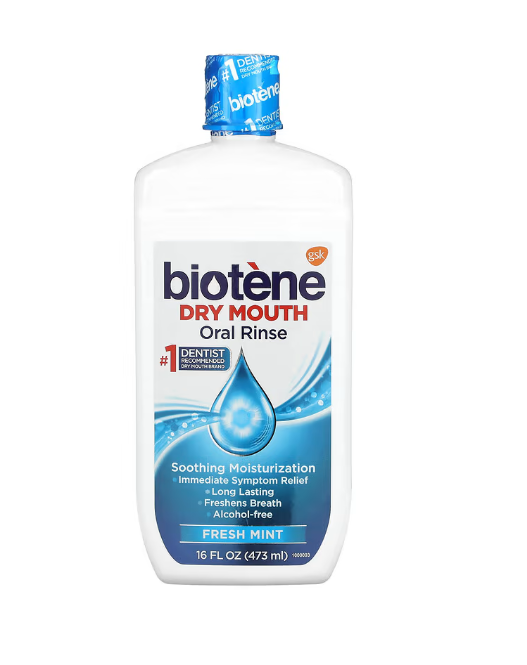
This is partly why products like Biotène Mouthwash occupy an interesting place in the cultural landscape. They are not status objects. They do not ask to be admired. They sit in the category of things chosen for how they make a moment feel, not how they make a person appear.
And that distinction matters.
We live in an era that is increasingly fluent in the language of self-observation. People notice when sleep feels off, when environments feel too dry, when routines stop working the way they once did. They build tiny systems around these observations. Not grand wellness identities—just practical accommodations. A different tea. A humidifier. A rinse by the sink. It is all part of the same understated instinct: preserving comfort before discomfort becomes the whole story.
The design of reassurance
There is also something culturally fascinating about the way certain care items are packaged emotionally. They rarely present themselves as exciting. Instead, they lean into calm. Soft colors. Gentle wording. A sense that this is not a dramatic intervention, just a steady companion in the background.
That aesthetic of reassurance reflects how many people actually want to be met when something feels off. Not with alarm. Not with hard-sell optimism. Just with the suggestion that small support counts.
And maybe that is the deeper appeal here: the permission to treat a low-level annoyance as worthy of care.
There is wisdom in that. Not every discomfort needs to become a crisis to deserve attention. Sometimes the most humane response is simply to notice what helps a day move more smoothly.
A private form of normalcy
The older I get, the more I suspect that adulthood is partly the art of learning which small comforts are non-negotiable. Not luxurious. Not dramatic. Just essential to feeling like oneself.
For some people, that is a certain pillow. For others, it is a morning walk before emails begin. And for others still, it might be an unassuming bottle near the sink that makes the mouth feel less like a problem to manage and more like a part of the body returning to quiet.
There is something almost poetic in that shift. We spend so much time thinking major life changes define us, when often it is the maintenance rituals that shape our days most intimately. They are repetitive, yes, but repetition is where comfort takes root.
Maybe that is why these overlooked products linger in memory. Not because they are remarkable in the usual sense, but because they arrive in moments when ordinary ease suddenly matters. They become part of a private agreement with oneself: let the day be a little softer, a little easier, a little less abrasive than it was an hour ago.
That is not a small thing.
It is, in its own modest way, a philosophy of care.