When a Name Sounds Like a Locked Drawer
Some names arrive like instructions, others like mysteries. This one sits somewhere in between, carrying all the odd weight of modern health language.
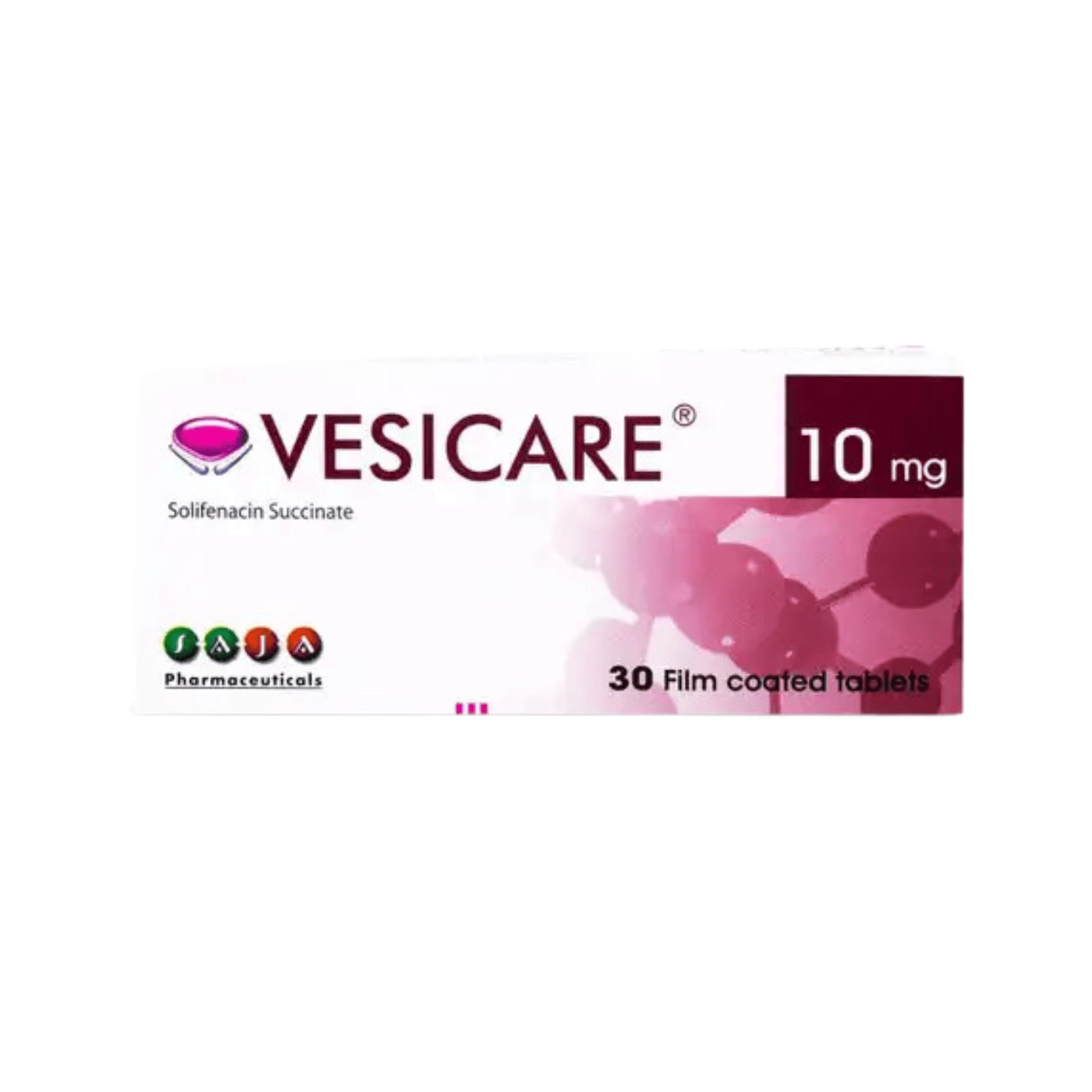
Some words don’t enter your life so much as appear there, already wearing a lab coat. They arrive polished, syllabic, almost sealed off from ordinary conversation. Solifenacin succinate is one of those names. It doesn’t sound like a feeling, or a symptom, or even a story. It sounds like a drawer in a cabinet you’re not sure you’re supposed to open.
I first came across it while skimming a product page, and what stayed with me wasn’t the commerce of it. It was the language. The way certain names create distance before they create meaning. The way they ask us to trust systems, labels, white spaces, and official-looking fonts long before we have any personal relationship with the thing itself.
The strange theater of medical naming
There is something oddly theatrical about the names attached to modern health. They’re often long, cool-toned, and detached from the messy human reasons anyone goes looking for them in the first place. Nobody wakes up thinking in chemical endings. People wake up thinking in interruptions, discomfort, routines gone sideways, and the quiet wish for a day that feels less negotiated.
Yet the names we meet in these moments are rarely intimate. They don’t speak in the language of experience. They speak in the language of systems. That gap is fascinating. A person may be dealing with something deeply personal, but the vocabulary waiting for them can feel industrial, as if the body has been translated into inventory.
Maybe that’s why such names linger. They feel less like words and more like passwords to a part of adulthood no one romanticizes.
Ordinary life is full of invisible negotiations
What interests me most isn’t the product itself so much as what its existence hints at: the hidden complexity of everyday life. So much of being human involves small calculations that never make it into public conversation. We talk easily about ambition, travel, food, fitness, and productivity. We are less fluent about inconvenience, fragility, and the private ways people adapt.
There is a whole social world built around appearing seamless. We like to present ourselves as uninterrupted. Capable. Effortless, even. But beneath that polished layer, many people are quietly arranging their days around things they would never mention over dinner. Not because those things are shameful, necessarily, but because the culture tends to reward neatness over nuance.
That’s part of what a name like this reveals. It hints at the invisible scaffolding behind normalcy. The backstage mechanisms. The quiet tools people keep near them while the front of life carries on looking composed.
Why technical language can feel oddly comforting
And yet, distance is not always a flaw. Sometimes clinical language offers a kind of relief. If a feeling is difficult, vague, or embarrassing, a formal name can place it outside the self for a moment. It can make experience feel more handleable. Less like a personal failure, more like part of a wider map.
There’s comfort in that, even if the words themselves are awkward. A difficult experience, once named, can stop feeling like pure chaos. The name may be clunky, but it suggests structure. It implies that someone, somewhere, has tried to sort the confusion into categories and containers. Not perfectly, perhaps, but enough to make the unknown a little less shapeless.
This may be one reason people become strangely attached to terminology they would never have chosen in another context. Language that sounds cold from the outside can feel stabilizing from within.
The supermarket shelf and the private self
Modern life has a peculiar habit of placing intensely personal concerns into transactional settings. You can be scrolling for socks, tea, or light bulbs, and then suddenly encounter something with a name like a laboratory filing code. The contrast is almost surreal.
It says something about the era we live in: how health, convenience, privacy, and shopping have blended into one continuous interface. The old boundaries are softer now. The pharmacy, the search bar, the advice of strangers, and the solitude of midnight browsing all seem to exist in the same flattened space.
That doesn’t make the experience less human. If anything, it makes it more revealing. People often meet these topics alone, in quiet windows of time, between meetings, after work, before bed. Not in dramatic moments, but in ordinary ones. That ordinariness matters. It reminds us that much of care begins not with revelation, but with recognition.
A name can be a mirror
Sometimes a technical term becomes meaningful not because it is elegant, but because it marks a threshold. Before it, there is uncertainty. After it, there is at least a shape to the uncertainty.
That shape may still be imperfect. It may still feel foreign. But even foreign words can become familiar if they keep appearing beside the life you’re trying to live.
And perhaps that is the quiet lesson hidden inside names like this one: they expose how often modern people move between two languages at once. One is the language of daily living, full of interruptions, errands, moods, and improvisation. The other is the language of classification, packaging, and formal terms. Most of us become bilingual in that divide without ever noticing.
A name that first feels like a locked drawer can, over time, become something else entirely—not warm, exactly, but less distant. Less sealed. More like part of the strange vocabulary of being a person in a world that keeps finding new ways to label what was always there.