When Beauty Starts Speaking in Benchmarks
A quiet look at what happens when appearance, routine, and self-presentation begin to borrow the language of trends.
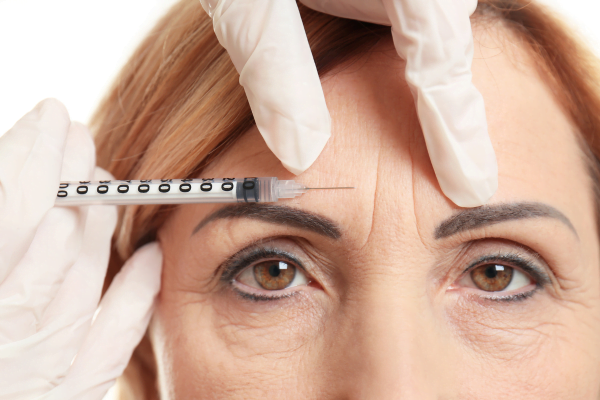
There is something revealing about the moment a beauty ritual stops being talked about as a private choice and starts sounding like a market category. The language shifts almost without anyone noticing. Suddenly, conversations are full of patterns, demand, momentum, and benchmarks. What once lived in bathroom mirrors, whispered recommendations, and half-joking confessions begins to carry the tone of an industry report.
That change says as much about culture as it does about aesthetics.
Botox has become one of those rare subjects that moves easily between very different rooms. It can appear in glossy clinic branding, in casual group chats, in celebrity interviews, in workplace small talk, and in the quiet mental inventory people keep about how they look when they are tired, lit from above, or seen on a phone screen. It belongs to commerce, image, routine, and self-perception all at once. That overlap is probably why the topic keeps attracting attention beyond any treatment room.
Numbers create a mood
Even when people claim not to care about statistics, they respond to them emotionally. A number can make a choice feel normal, rising, overdue, or suddenly strategic. Trends do not just measure behavior; they give behavior a social atmosphere. Once a personal decision is framed as part of a broader movement, it no longer feels isolated. It becomes legible.
That may be part of the fascination behind clinic trend reporting. The appeal is not only in knowing what is happening, but in sensing what kind of moment we are living through. Are people leaning into maintenance? Are clinics becoming more like lifestyle spaces than rare-event destinations? Are beauty routines becoming more scheduled, more conversational, more optimized? These questions hover around the topic even when nobody says them directly.
A source touching on that wider shift can be found here.
The clinic as a cultural setting
There was a time when many beauty interventions carried an aura of secrecy. Now, in some circles, the secrecy has thinned. Not vanished, exactly, but softened into curation. People may not disclose everything, yet they often speak in a more relaxed, semi-public way about upkeep. The language has changed from revelation to management.
That matters because clinics themselves have changed in the public imagination. They are increasingly framed not only as places for correction, but as part of a broader self-styling ecosystem. Somewhere between salon, skincare counter, and wellness appointment, they occupy a curious new role. They promise polish, but they also promise familiarity. Less transformation than calibration.
And calibration is a very contemporary desire. It fits neatly into an era obsessed with subtle upgrades: the better light, the cleaner interface, the refined version of the same self.
Visibility has rewritten the stakes
It is hard to separate this conversation from the camera. Not just the formal camera, but the everyday front-facing one. Faces are now viewed repeatedly, casually, and often under conditions that encourage critique. Video calls, stories, selfies, reels, recordings, archived moments that can be replayed in seconds: all of this has turned expression into something people examine with unusual frequency.
That does not mean everyone responds the same way. But it does mean beauty choices increasingly exist within a loop of constant visual feedback. In that environment, even subtle interventions can take on outsized symbolic meaning. They start to represent control, preparedness, or participation in a visual culture that rarely goes fully offline.
Which is why trend talk feels so sticky here. It offers a framework for understanding not just demand, but attention itself.
Benchmarks are never only about clinics
A benchmark sounds neutral. Practical. Measurable. Yet the word carries a hidden story about expectations. Benchmarks tell us what counts as steady, strong, emerging, crowded, or competitive. In other words, they define what looks normal.
And once normality is established, people begin orbiting it, resisting it, or quietly comparing themselves to it. That is true for businesses, of course, but also for individuals. The beauty world often presents choices as deeply personal while surrounding them with social cues that are anything but private.
This is why the subject lingers in public conversation. It is not simply about appearance. It is about how personal decisions are shaped by collective weather. Trends function like forecasts: even if you do not follow them, you still feel the season changing.
The modern promise of subtlety
Perhaps the most interesting cultural detail is that the aspiration is so often described as invisible. Not dramatic, not obvious, not a new face—just a rested version, a smoother mood, a less interrupted surface. The ideal is frequently framed as discretion.
That is a powerful modern aesthetic: visible effort devoted to appearing effortless.
It explains why discussions around this topic can sound oddly split between openness and understatement. People are more willing to talk, yet the desired result is often the impression that nothing much has happened at all. It is a culture comfortable with maintenance, but still emotionally attached to naturalness as a style.
That tension may be the real story hidden beneath all the charts and clinic benchmarks. Not merely whether interest rises or falls, but why so many people are drawn to choices that promise refinement without announcement.
In the end, trend reports around beauty do more than track a market. They reveal what a moment admires, what it worries about, and how it teaches people to read their own reflection. When aesthetics start speaking in the language of benchmarks, culture is usually trying to tell us something larger about control, visibility, and the quiet pressure to look as if time has been gently edited.
https://medwholesalesupplies.com/2024-trends-and-statistics-for-botox/