When Care Moves Into the Room You’re Already In
A quiet look at how virtual appointments reshape expectations, attention, and the strange intimacy of being seen through a screen.
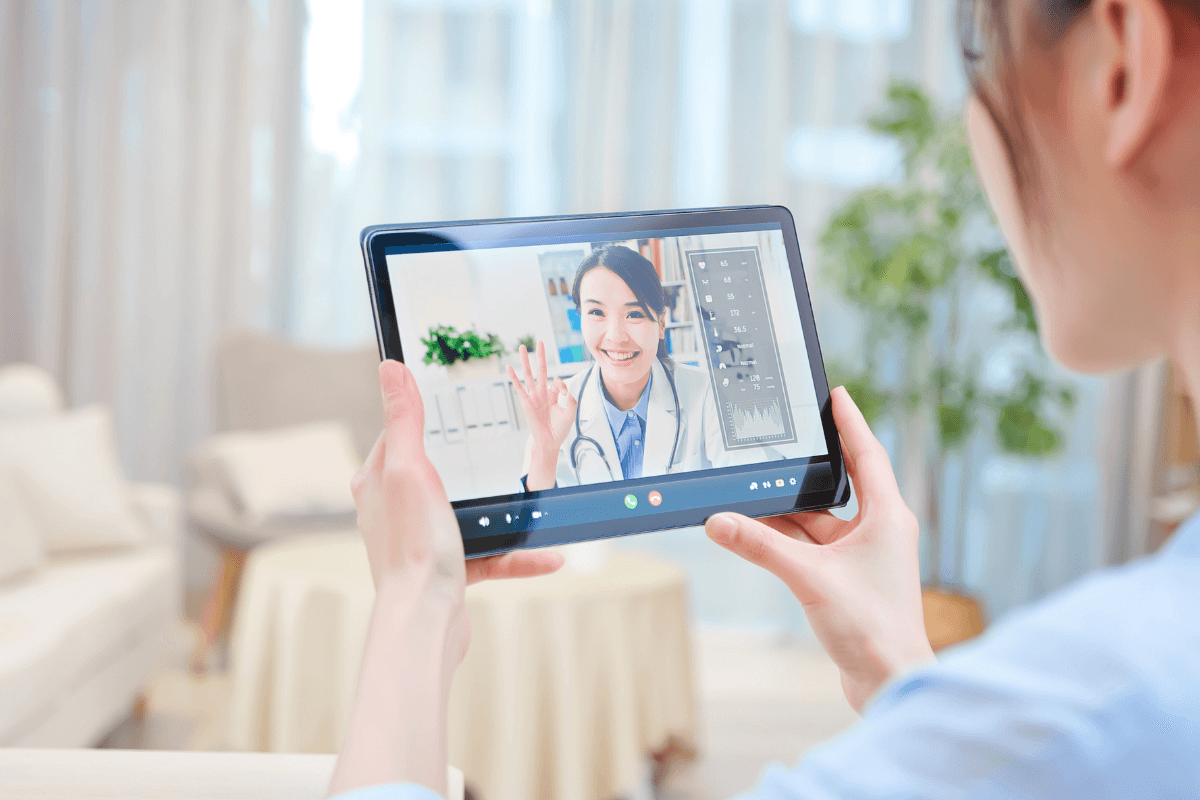
There was a time when an appointment felt inseparable from travel. You left one space, entered another, and let the day rearrange itself around a waiting room, a clipboard, fluorescent lights, and the peculiar social choreography of being called by name. A visit carried a kind of ceremony, even when it was routine.
Now the doorway can be a screen.
That shift still feels larger than the technology itself. A virtual visit is not only a different way to meet; it changes the mood of the encounter. Care arrives in the same room where emails are answered, laundry is folded, coffee gets cold, and children wander through asking unrelated but urgent questions. The ordinary world doesn’t pause just because attention is needed. It sits there in full view.
A different kind of preparation
What people often notice first isn’t complexity but contrast. Instead of locating a building, the task becomes locating a pocket of calm. Instead of wondering about traffic, there is the smaller, stranger question of where to place the phone or laptop so the moment feels less improvised. It turns out that modern readiness can look surprisingly domestic: charging a device, closing a door, lowering background noise, remembering what you meant to say before the screen turns on.
That kind of preparation has an interesting texture. It is practical, yes, but it is also emotional. In a physical office, the environment does part of the work for you. It signals seriousness. It cues the mind toward focus. At home, that framing has to be created on purpose. The appointment doesn’t announce itself with a lobby. It begins in the middle of your own life.
And that can be both comforting and disorienting.
The intimacy of familiar surroundings
There is something quietly revealing about speaking from a place you know well. A bedroom corner, a kitchen chair, a parked car between errands—these settings say something about contemporary life without meaning to. They remind us that people rarely divide themselves neatly into categories like “health,” “work,” and “home.” Most days are blended. Virtual care reflects that reality more honestly than many formal systems ever did.
It also alters the feeling of vulnerability. For some, familiar surroundings soften the edges of the experience. For others, the lack of ceremonial distance makes everything feel more immediate. The conversation happens where the rest of life happens, which can make it feel less intimidating, but also less buffered.
That tension is part of what makes remote care culturally interesting. It asks us to take a traditionally structured interaction and fold it into everyday space. The result is not less real. If anything, it can feel oddly direct.
Attention has a new shape
Screens have trained us to expect multitasking, quick glances, muted interruptions, and the temptation to drift. But some moments resist that rhythm. A virtual appointment asks for a version of attention that many people have to deliberately recover. Not perfect concentration, necessarily—just presence.
That is why so much of the experience seems to revolve around small rituals. Setting the device down instead of holding it. Sitting somewhere with decent light. Keeping a note nearby. Taking a breath before joining. None of these things are dramatic, and yet they reveal something bigger: convenience does not eliminate the need for intention.
In fact, convenience sometimes makes intention more visible. When the process becomes easier, what stands out is not effort but awareness. The question is no longer whether you can get there. It becomes whether you can arrive mentally, even while physically staying where you are.
A thoughtful look at that shift appears in this piece on virtual visits, which hints at how much expectation now lives in the details around the conversation, not just the conversation itself.
The waiting room never really vanished
One of the most curious things about digital appointments is that they didn’t erase waiting; they transformed it. Waiting used to be public and visible. Now it can be private and oddly ambiguous. You stare at a connecting screen, recheck your camera, wonder whether silence means delay or process. The old ritual of waiting among strangers has been replaced by a quieter suspense.
That change feels emblematic of the broader digital era. Friction hasn’t disappeared. It has become less theatrical.
And yet there is something undeniably humane in the new arrangement. It recognizes that life is crowded, that time matters, that people want forms of care that can meet them where they actually are. Not in theory. In kitchens, on couches, in those in-between hours when the day has not fully yielded but attention is still needed.
A softer idea of access
Perhaps that is why the topic keeps resurfacing in conversation. Virtual care is not only about efficiency or novelty. It reflects a larger shift in how people think about access, comfort, and participation. The old image of care depended on entering an institution. The newer image sometimes begins by opening a laptop.
Neither image is purely symbolic, but both carry emotional weight. One suggests formality and structure. The other suggests adaptation. And somewhere between them is a more contemporary understanding of what it means to make room for important conversations.
Maybe that is the real change: not that the visit moved online, but that the boundaries around care became a little more porous, and a little more human.
https://medispress.com/health-hub/virtual-doctor-visit-guide-what-to-expect-and-prepare/