When Similar Choices Carry Different Meanings
A reflective look at how people make sense of near-identical options in health conversations, where language, trust, and routine quietly matter.
There is a particular kind of decision that looks simple from a distance and becomes strangely layered the closer you get to it. Two names appear beside each other. They seem related. They belong to the same general conversation. Someone might even describe them in the same breath. And yet, for the person standing in the middle of that choice, they can feel worlds apart.
That is often the hidden texture of health-related decisions: they are not only about categories, labels, or neat comparisons. They are also about memory, reassurance, timing, familiarity, and the subtle confidence that comes from feeling oriented rather than lost.
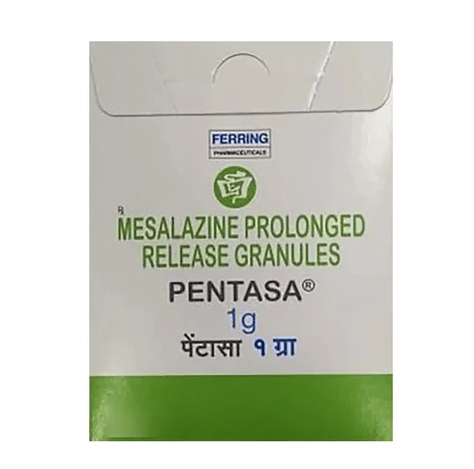
A comparison like the one referenced by Border Free Health in its discussion of Asacol and Pentasa sits inside a much larger human pattern. We are constantly trying to understand whether two similar-seeming things are truly interchangeable, meaningfully different, or simply surrounded by different language.
The comfort of a clear distinction
People like distinctions. We lean on them when the world feels too technical or too crowded with terminology. A distinction gives us a handle. It says: this belongs here, that belongs there, and now the fog has a shape.
But the trouble with similar options is that they rarely separate themselves in dramatic ways. They may be discussed in relation to the same condition, the same broad purpose, or the same general family of care. Their names may circulate through forums, appointment notes, pharmacy conversations, and private searches late at night. The difference may not feel obvious to someone encountering them without context.
So comparison becomes less like choosing between red and blue, and more like listening for a faint change in tone.
This is where people often begin to gather fragments. A phrase remembered from a clinician. A line from a leaflet. A story from someone else. A question about whether a change in routine might feel different. None of these fragments creates certainty on its own, but together they form the emotional landscape around a decision.
Why switching feels bigger than it sounds
The word “switching” can sound mechanical, as if one object is being lifted out and another placed neatly in its position. In everyday life, switching is rarely that tidy.
People switch phone brands and spend weeks missing the old keyboard. They move neighborhoods and still reach for a grocery store that is no longer nearby. They change morning routines and discover that the smallest rituals were doing more emotional work than expected.
Health-related switching carries its own atmosphere. Even when the conversation is calm and practical, there can be a quiet internal pause: Will this feel the same? Will my day change? Will I notice something? Am I giving up familiarity or gaining clarity?
Those questions are not always about fear. Sometimes they are about continuity. People often want their care to feel coherent, like a path rather than a series of disconnected turns. When a familiar name changes to another name, the mind naturally tries to redraw the map.
The language around sameness
One of the more interesting things about comparisons is how much weight we place on words like “similar,” “different,” “alternative,” and “equivalent.” They sound straightforward, but each carries its own emotional charge.
“Similar” can reassure, but it can also leave room for doubt.
“Different” can clarify, but it can also make a person brace.
“Alternative” can sound flexible to one person and second-best to another.
“Equivalent” may feel tidy, yet people still wonder what equivalence means in lived experience.
This is why health language often becomes cultural language. It moves from clinics and pharmacies into kitchens, message threads, family conversations, and search bars. People are not merely asking what something is. They are asking how to place it inside a life already full of habits and obligations.
The private work of making sense
There is a kind of research people do that is not exactly research. It is more like circling. They read a little, step away, think about their own routine, return with a more specific question, then wonder whether the question is too small to ask.
But small questions are often where real life lives. Not in grand abstractions, but in the daily choreography of when something is remembered, how it is stored, what it is called, and how confident a person feels when explaining it to someone else.
The comparison between two options may begin with technical distinctions, but it often ends up touching softer terrain: trust, patience, and the desire not to feel foolish while learning.
There is dignity in that process. It reflects the ordinary human wish to participate in one’s own care without pretending to be an expert. It is possible to want clarity without wanting control over every detail. It is possible to ask careful questions not because one doubts everyone, but because one wants to understand the shape of the decision.
Similar names, different stories
What stands out in any paired comparison is not only the subject itself, but the way people respond to proximity. When two things sit side by side, we instinctively look for the hinge between them. We want the moment where the story splits.
Sometimes that hinge is practical. Sometimes it is historical. Sometimes it is simply the difference between what someone has known and what someone is now being asked to consider.
And perhaps that is why these comparisons keep mattering. They remind us that decisions are not made in sterile rooms of pure information. They happen in ordinary rooms, between work emails and dinner plans, while someone tries to translate unfamiliar language into a sense of steadiness.
The names may be specific, but the pattern is broad. We encounter choices that look close together. We pause. We ask what difference means. Then we try to move forward with a little more understanding than we had before.