When Two Names Try to Explain the Same Unease
Sometimes the hardest part of discomfort is not the feeling itself, but the search for the right language around it.
There is a particular frustration in meeting a problem that seems to have more than one name. The moment language splits, confidence often goes with it.
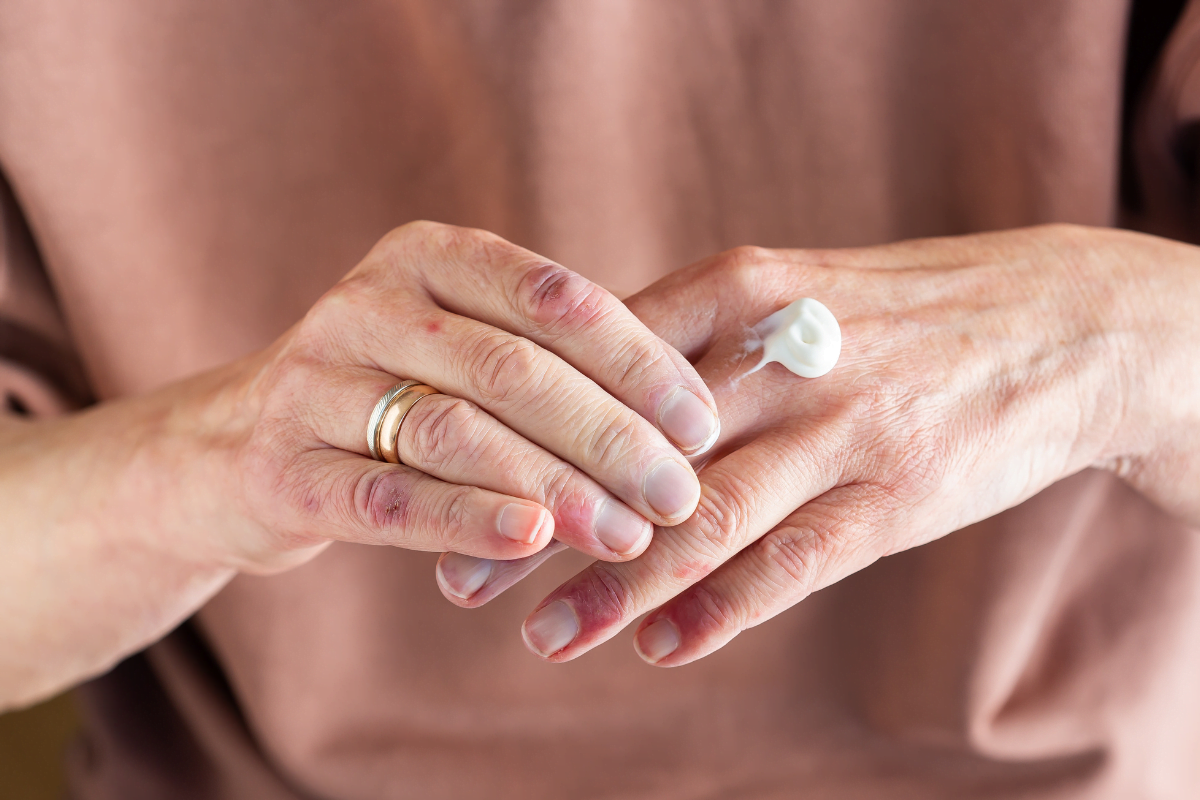
A condition shows up on the body, visible enough to feel public even in private, and suddenly the conversation becomes less about sensation and more about sorting. Is it this? Is it that? Why do two labels seem to circle the same patch of experience? Even before anyone reaches a conclusion, the mind starts doing its own categorizing, building tiny boxes out of uncertainty.
That is what makes comparisons like this one so interesting. Not only because people want clarity, but because the body has a way of resisting neat definitions. Skin, especially, is expressive in a way that can feel almost literary. It flares, settles, changes mood, returns with a different tone. It does not always behave like a tidy headline.
The modern habit of naming everything exactly
We live in an age that likes precision. Search bars reward sharp distinctions. Lists promise to separate one thing from another. The internet has trained many of us to believe that, with enough reading, every mystery can be turned into a side-by-side chart.
But lived experience rarely arrives as a chart.
When something affects the hands or feet, that mismatch becomes even more noticeable. These are not distant parts of life. They are how we move through ordinary hours. They greet the floor in the morning, grip the steering wheel, hold a coffee cup, button a shirt, wave hello, scroll late at night. Any disruption there feels oddly symbolic, as if routine itself has been interrupted.
That may be why distinctions matter so much emotionally. The question is not only about terminology. It is also about recognition. People want to know what story they are in.
Similarity has a way of stealing authority
Two conditions can appear close enough in the public imagination that they begin to blur into one another. Once that happens, confidence gets borrowed from fragments: a photograph, a forum comment, a memory of something someone once said in passing. The result is a strange kind of almost-knowing.
Almost-knowing is one of the defining moods of health culture now.
It is not ignorance, exactly. It is a surplus of partial information. A person can become fluent in clues without feeling settled by them. They may learn the vocabulary, recognize the recurring comparisons, even stumble upon nuanced distinctions, and still carry the same underlying uncertainty. The names become familiar before they become meaningful.
In that sense, the real tension is not between one label and another. It is between appearance and interpretation.
Skin as a social language
Skin has always occupied a peculiar place in the human imagination. It is both shield and signal. It announces stress, weather, habit, fatigue, irritation, vulnerability. It can make people feel exposed without saying a word.
That visibility changes the emotional temperature of the conversation. A problem hidden inside the body invites one kind of uncertainty. A problem that appears on the surface invites another. It can feel easier to scrutinize, easier to compare, easier for others to notice, and strangely harder to live with because it sits at the border between self and world.
That is one reason these paired terms draw attention. They are not just diagnostic language drifting through a search result. They represent an attempt to decode what the surface is saying.
A useful way into that conversation is not to treat the body like a machine producing simple alerts, but like a place where patterns emerge, overlap, and sometimes resist instant interpretation. Seen that way, comparison becomes less of a showdown and more of a reminder that not every visible difference is obvious at first glance.
The deeper appeal of “telling them apart”
There is something deeply human in that phrase. To tell things apart is to regain a sense of orientation. It is what we do with seasons, moods, cities, friendships, and versions of ourselves.
We notice that two experiences seem similar from far away and different up close. We learn that resemblance is not sameness. We realize that categories can help, but they can also flatten. And we become a little more humble about the distance between looking and knowing.
That may be the quiet lesson beneath topics like this one. Not simply that distinctions exist, but that the desire for distinction comes from a very ordinary place: the wish to feel less lost in one’s own experience.
For anyone who has fallen into the spiral of searching, comparing, and second-guessing, that feeling is familiar. The body presents a puzzle. Language offers possibilities. Certainty stays just beyond reach.
A more thoughtful introduction to that tension can be found in this comparison, which reflects the broader impulse to make sense of similar-looking experiences without pretending they are interchangeable.
Maybe that is the most honest place to end: not with a dramatic conclusion, but with a softer one. Sometimes clarity begins not when everything is simplified, but when we accept that resemblance and difference often live side by side. The body speaks in textures, not slogans. And our first task is often not mastery, but attention.